Quench Vessels

Quench vessels for rapid gas cooling in wet gas cleaning systems

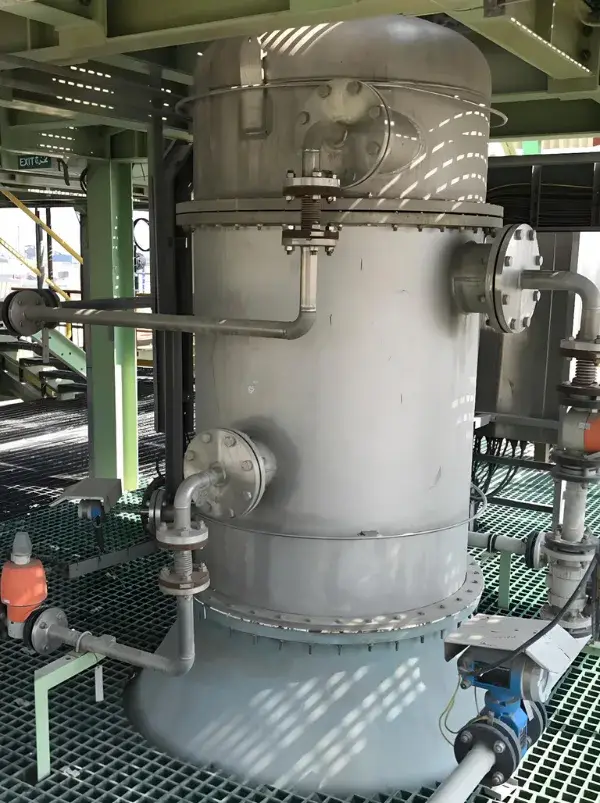
ERG quench vessels are used to rapidly cool hot flue gas, process gas and syngas as the first stage of a wet gas cleaning package. They apply controlled adiabatic saturation cooling to bring gases from elevated temperatures down to defined quench temperatures, protecting downstream scrubbers and fans while maintaining stable process conditions.

Quench vessel operating principle

A quench vessel is usually configured for vertical gas flow with the inlet nozzle at the top. The hot gas enters the vessel and is immediately sprayed with the quench liquor. The gas is cooled by adiabatic saturation – a portion of the sprayed quench liquor evaporates, and the energy required for this evaporation is taken from the hot gas, causing its temperature to drop.

The gas cools to the adiabatic saturation temperature (quench temperature), which depends on the inlet gas temperature, humidity and dry gas composition. The quenched gas then passes to the next treatment stage of the gas cleaning package, and the remaining quench liquor drains under gravity into a sump tank from where it is recirculated back to the top of the quench vessel.

ERG has experience of providing quench vessels for:

  • Oxidiser flue gases in the range 850 to 1,150 °C, containing sulphurous and/or halogenated contaminants and particulates.
  • Process gases up to 500 °C, also containing sulphurous and/or halogenated contaminants and particulates.
  • Syngases up to 250 °C, containing VOCs, ammonia, halogenated and sulphurous contaminants and tars.

Examples of typical high‑temperature gas cleaning applications are available in ERG’s published case material.

Quench Vessels

Design features and materials

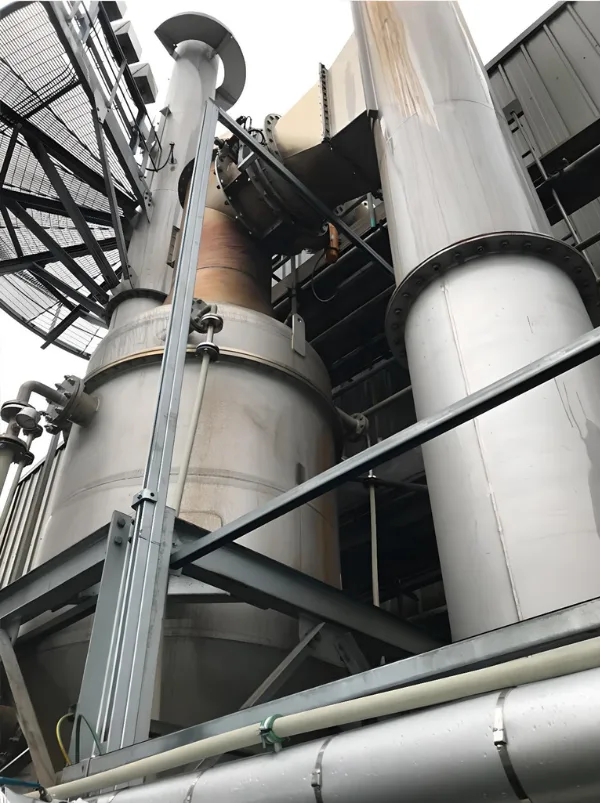
ERG matches quench vessel materials of construction to the process requirements, considering contaminants and operating temperature. Typically, quench vessels are fabricated in 316 stainless steel, duplex stainless steel, Hastelloy C‑276 or brick‑lined carbon steel.

Key design features include:

  • Process safety – emergency water: designs include an emergency water supply which operates automatically if there is a problem with the main quench liquid circuit, protecting downstream equipment from potential heat damage.
  • Robust operation: quench vessels are designed to limit corrosion in the wet‑dry interface at the top of the vessel and erosion where particulates are present, and they feature easy access for inspection and maintenance of internal parts.
  • Process control: careful control of the liquid operating temperature is needed to prevent downstream problems, for example formation of sub‑micron aerosol mist in subsequent stages. ERG’s design, control strategy and O&M requirements are combined to ensure smooth plant operation.
Design Features

System configuration and integration

As well as complete quench vessels, ERG can also provide partial quenches using air or water to reduce gas temperature without achieving full adiabatic saturation, where process conditions or downstream equipment favour partial cooling.

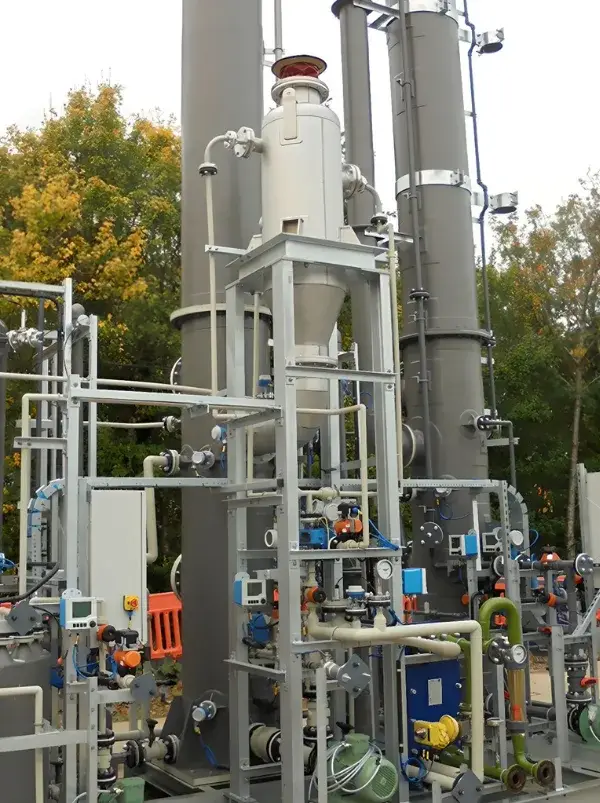
ERG quench vessels are provided as part of complete scrubbing packages, with the necessary sump tank, expansion bellows, fan, ductwork, pump, pipework and controls. In the majority of applications, the quench is combined with other ERG heat and mass transfer equipment – such as venturi scrubbers, tray towers, packed towers and V‑tex® scrubbers – to form an integrated gas cleaning system.

Operators are referred to the associated mass transfer technology pages for full details of the complementary equipment range.

ERG

Industrial gas cleaning/Thermal systems

System Maintenance

Odour control

Plastic-GRP Fabrication