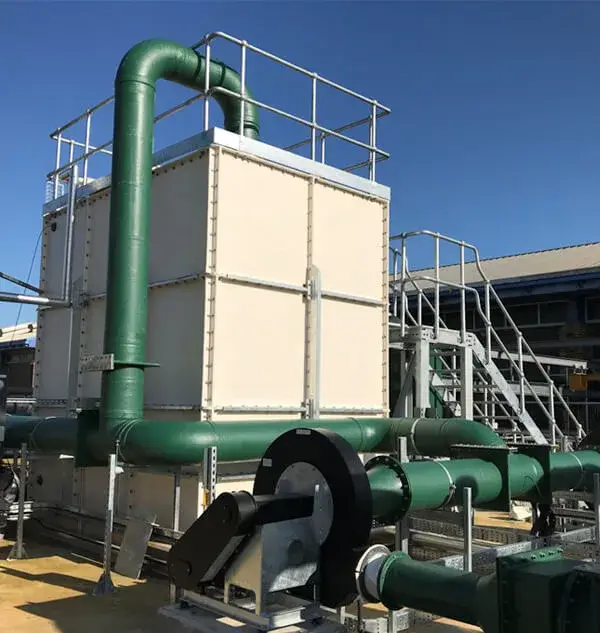
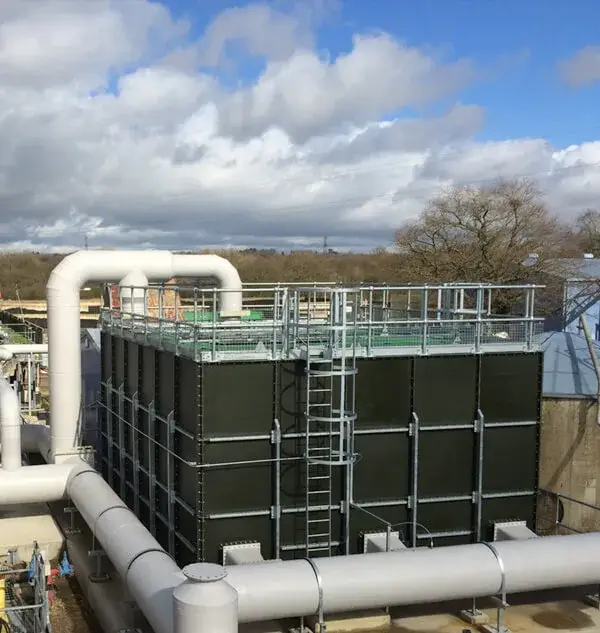
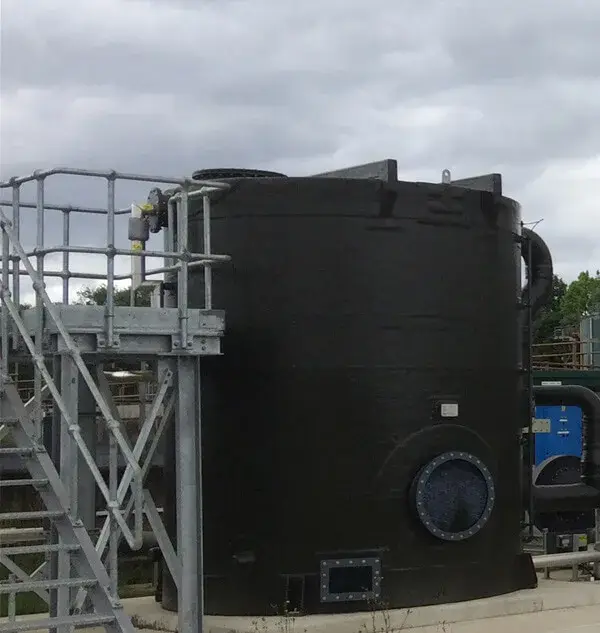
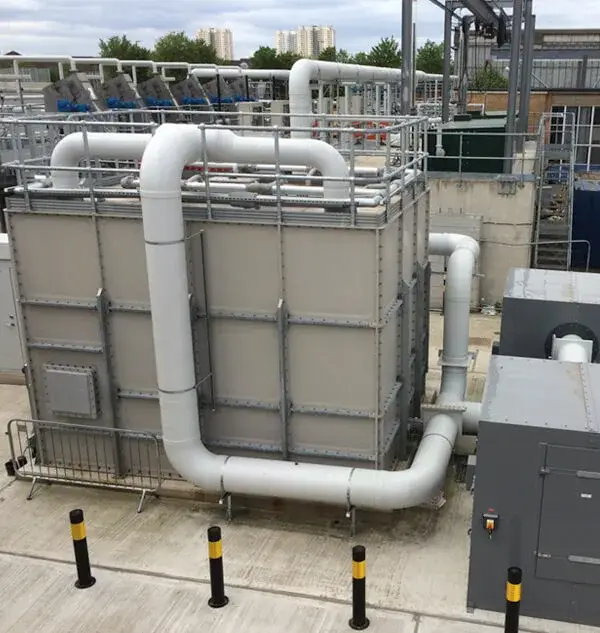
ERG bio‑trickling filters provide high‑efficiency, sustainable odour control for small to medium air flowrates, either as stand‑alone units or in combination with dry media polishing filters.
Bio‑trickling filter duty and performance
These systems are designed for highly contaminated odorous air streams containing hydrogen sulphide (H₂S), reduced sulphur compounds, soluble VOCs and ammonia, and are engineered to deliver stable long‑term performance with low operating costs. Filled with durable, bio‑inert pumice media, ERG bio‑trickling filters are specifically configured to provide outstanding value for money and simple operation on municipal wastewater, industrial effluent and process odour duties.
Performance typically exceeds 99% H₂S removal efficiency, and in combination with downstream carbon filters an odour discharge of less than 1,000 ouE/m³ is guaranteed and comfortably achieved. This makes bio‑trickling filters well suited to wastewater odour control, sewage treatment works, sludge handling and other odorous air pollution control applications where high H₂S removal is required.
Bio‑trickling filter technology and operation
Used as a stand‑alone package, or with dry media polishing filters, ERG’s bio‑trickling filters provide trouble‑free odour control for highly contaminated, small to medium air flowrates. A specially selected cocktail of bacteria, enzymes and nutrients is pre‑seeded into the bio‑trickling filter to ensure rapid development of odour‑neutralising bacteria which colonise the media bed.
The bacteria digest the odour‑causing compounds, which typically include H₂S, mercaptans, organic sulphides, soluble VOCs and ammonia. The optimised environment for bacterial activity is maintained by controlled irrigation with filtered final effluent, or with water dosed with low‑level nutrients if no final effluent is available. Designed and built to BS 4994 or BS EN 13121 and fully compliant with WIMES 8.05, ERG bio‑trickling filter systems offer assured performance and competitive whole‑life cost.
System design and scope of supply
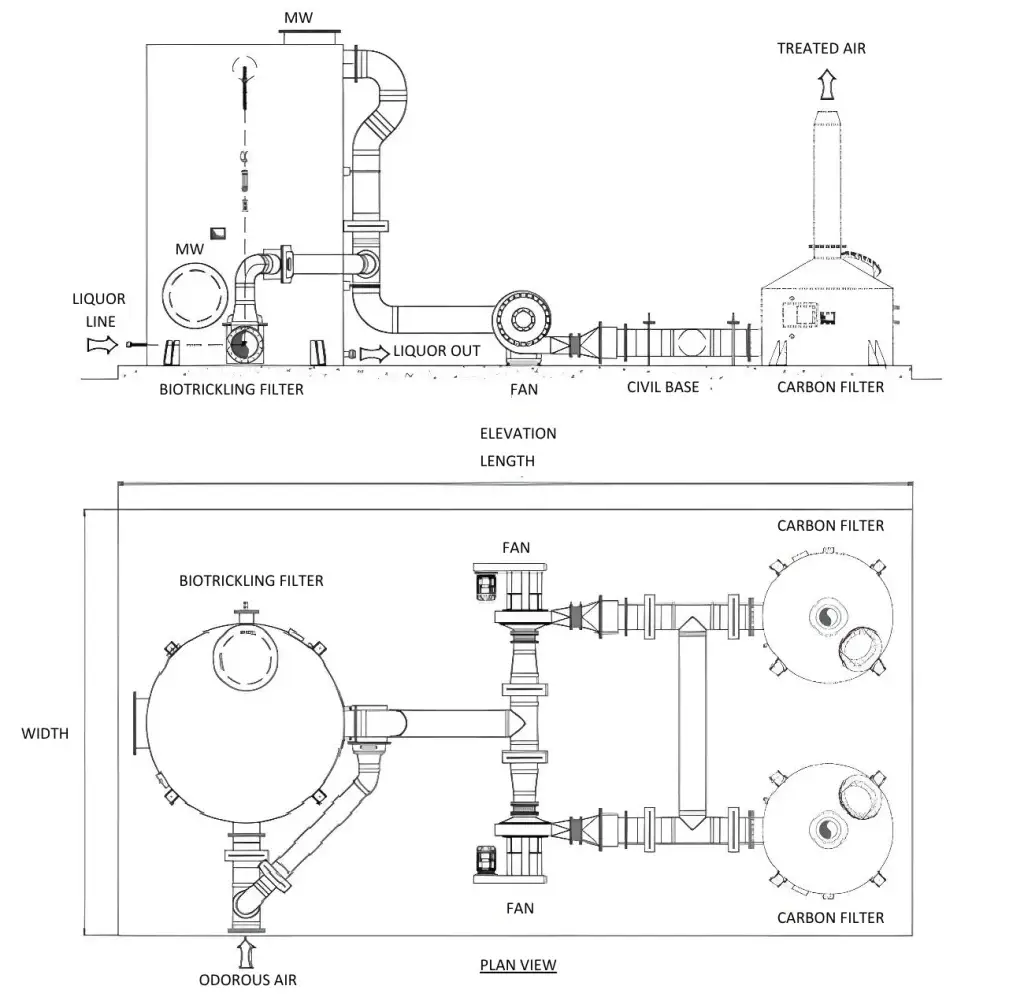
All our systems are custom‑designed for the odour control duty required, and typically include installation of:
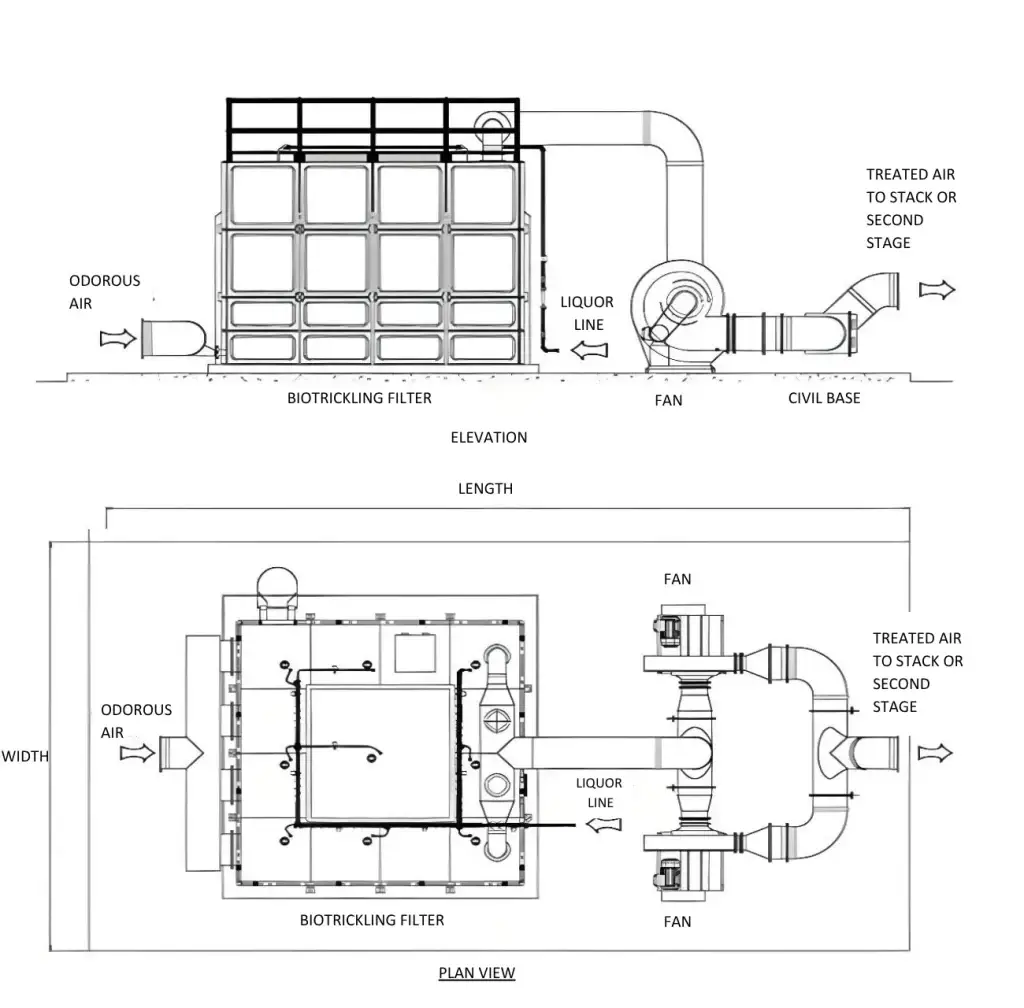
Vessel and biomedia, with optional access structure, non‑slip surface and handrails (for walk‑on, rectangular vessels)
Irrigation system including strainers, instrumentation and dosing package if required
Air extraction fans and ductwork
Electrical control panel
Downstream carbon filter for enhanced performance
This scope allows the bio‑trickling filter to be integrated as part of a complete odour control system for wastewater, municipal waste and other industrial odour control applications.
Advantages of ERG bio‑trickling filters
All systems are bespoke and designed to match the system requirements.
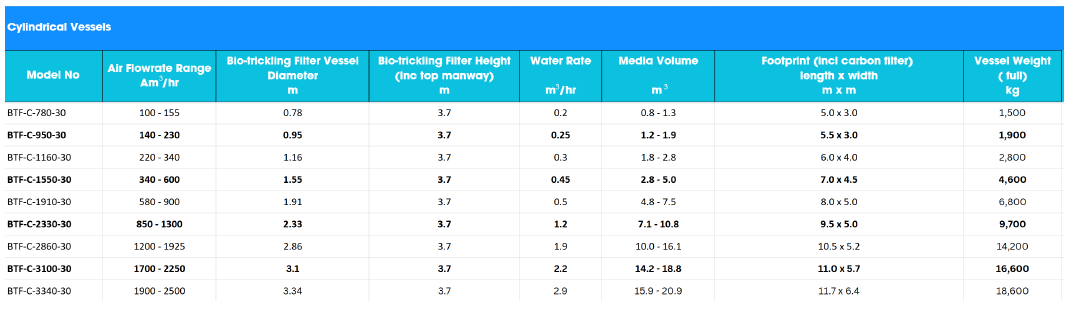
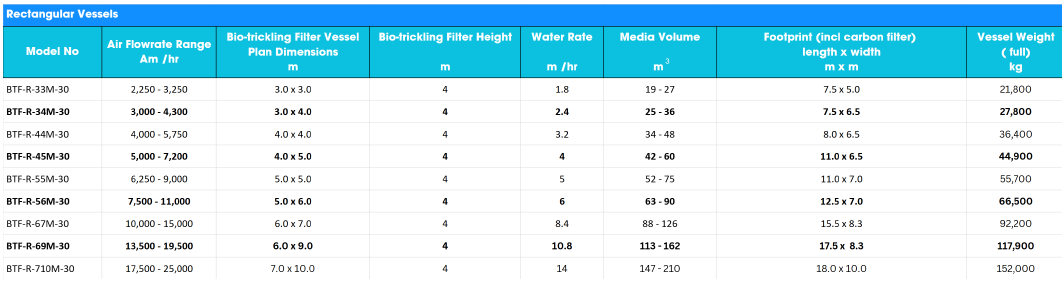
The standard range of cylindrical vessels is used for flowrates up to 3,000 m³/hr and modular sectional tanks for flowrates up to 25,000 m³/hr or larger if required.
Options are available for including pumice stone media or structural plastic media.
The inert pumice stone biomedia lasts for 20 years; the pumice does not decay or suffer from acidification or compaction, ensuring contamination removal remains constant for the life of the filter.
The units are highly compact with a small footprint.
They are able to reliably treat high levels of contamination (over 200 ppm H₂S) and achieve removal efficiencies of >99% H₂S removal and >95% odour removal in a single tower.
The operating costs are low when compared with other odour removal technologies.
The vessels are designed to allow easy maintenance access to the spray nozzles and inspection of the media; media replacement is achieved using removable hatches.
The absorption of contaminants into the bio‑film around the media and subsequent biological aerobic degradation forms a stable (usually acidic) effluent which is released to drain, and the bio‑trickling filter is optimised to ensure an acceptable pH in the effluent stream. If filtered final effluent is not available, ERG can provide a nutrient dosing system.
When is a bio‑trickling filter preferred over a chemical scrubber?
A bio‑trickling filter is typically preferred where odorous compounds such as H₂S, mercaptans and biodegradable VOCs are present at low to medium concentrations and a sustainable, low‑chemical‑use solution is required. Chemical scrubbers may be selected instead where fast start‑up, non‑biodegradable pollutants or unusual operating conditions make biological treatment less suitable.
What airflows and H₂S concentrations can ERG bio‑trickling filters handle?
ERG’s standard bio‑trickling filter range covers flowrates up to around 3,000 m³/hr for cylindrical vessels and up to 25,000 m³/hr or larger for modular sectional tanks. The units can reliably treat high levels of contamination, typically over 200 ppm H₂S, while maintaining >99% H₂S removal efficiency and high overall odour removal.
Maeve
Hi, I'm Maeve, ERG's virtual assistant.
Would you like to chat with an expert, or are you just browsing?
No problem. Feel free to look around — I'm here if you need me.
What is your enquiry about?
Great. Can you leave your details so the right person can get back to you?
Please give us a short description of your enquiry.
We'll only use your details to respond to your enquiry.
Sending your enquiry…
Thank you. One of our experts will contact you shortly.
Sorry, something went wrong sending your enquiry. Please try again in a moment.