ERG carbon filters provide high‑efficiency dry media odour control and VOC polishing, either as standalone units or installed downstream of bio‑trickling filters or chemical scrubbers.
Carbon filter duty and performance
Designed and built to BS 4994 or BS EN 13121 and fully compliant with WIMES 8.05, these dry media filters require no routine operator intervention and deliver guaranteed discharge concentrations for hydrogen sulphide (H₂S), odour and VOC emissions. They are used for both primary odour control on smaller airflows and as polishing stages following biological or chemical treatment on larger systems.
Carbon media is selected to match the duty, with alkali‑impregnated grades for H₂S and reduced sulphur compounds and activated carbon grades for VOC removal and odour polishing. Media replacement intervals are defined to suit the required bed life and operating profile, balancing bed depth, footprint and whole‑life cost.
Carbon filter technology and operation
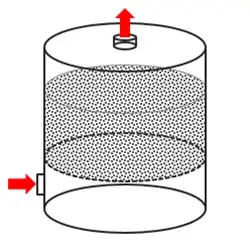
ERG offers a comprehensive range of carbon filters, used as standalone filters or as polishing stages on the discharge from a bio‑trickling filter or chemical scrubber. Odorous and VOC‑laden air is passed through the packed carbon bed, where contaminants are removed by adsorption and, for impregnated grades, by chemical reaction within the media.
All ERG dry media filters are designed to provide stable pressure drop and straightforward media changeout, with access arrangements and nozzles configured to suit site handling constraints. The combination of appropriate media selection, vessel design to recognised standards and WIMES‑compliant configuration provides assured odour control performance and competitive whole‑life costing.
Performance, benefits and media options
Key benefits of ERG’s range of carbon filters include:
High removal efficiency of H₂S and other odours
Outlet H₂S concentrations typically <5–10 ppb
VOC polish to <200 ouE/m³
Filters sized to treat from 200 to 200,000 m³/hr
Low pressure drop, typically <500 Pa
Bed life designed to suit requirements
Low capital cost
Supplied in PVC/GRP or coated steel
Carbon media is available through our framework media suppliers, including:
Alkali impregnated carbon – pelletised for low pressure drop, with up to 25–40% w/w take‑up of H₂S and good mercaptans removal
Activated carbon – pelletised or granular, for VOC removal
Special applications – alternative grades available for unusual duties
Other impregnated media – oxidising media for VOC odour polishing
ERG has successfully installed over 150 carbon filters across the UK. Performance typically exceeds 99% H₂S and VOC removal efficiency, and an odour discharge of <1,000 ouE/m³ is guaranteed for most applications.
System design and scope of supply
All our systems are custom‑designed for the odour control duty required, and typically include installation of:
Vessel and carbon media, with optional access structure (for walk‑on, annular vessels)
Mist eliminator and/or in‑duct air heater for moisture conditioning
Air extraction fans and ductwork
Electrical control panel
Integrated system design with upstream bio‑trickling filters or chemical scrubbers
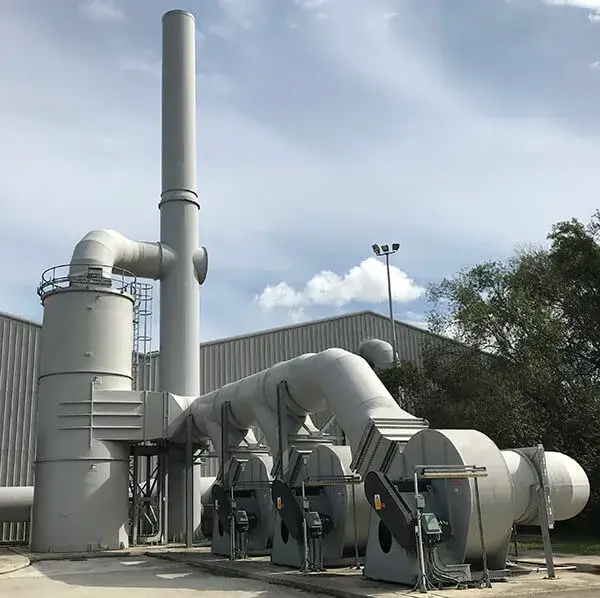
Three standard carbon filter configurations are offered – Deep Bed, Dual Deep Bed and Annular – with bespoke designs available for special projects. These configurations allow the system to be optimised for footprint, pressure drop, media utilisation and maintenance access.
Standard carbon filter configurations
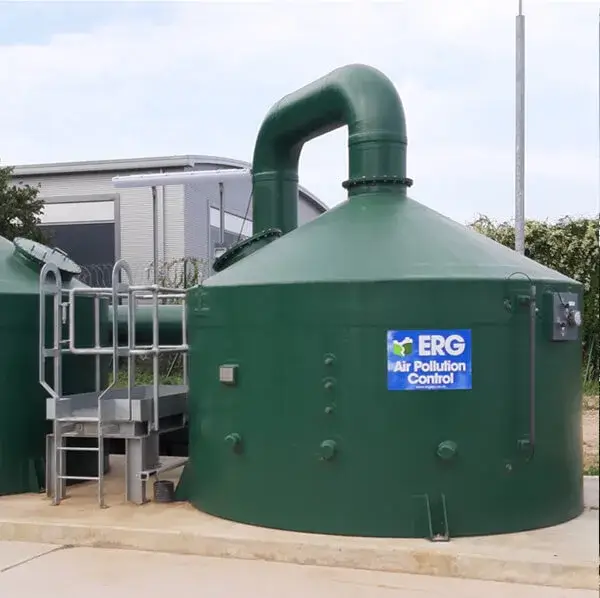
Deep Bed Filters
Ideal for small to medium air flows 200 to 10,000 m3/hr
Can be passive or forced ventilation
Widely used for local tank ventilation
Single or dual media
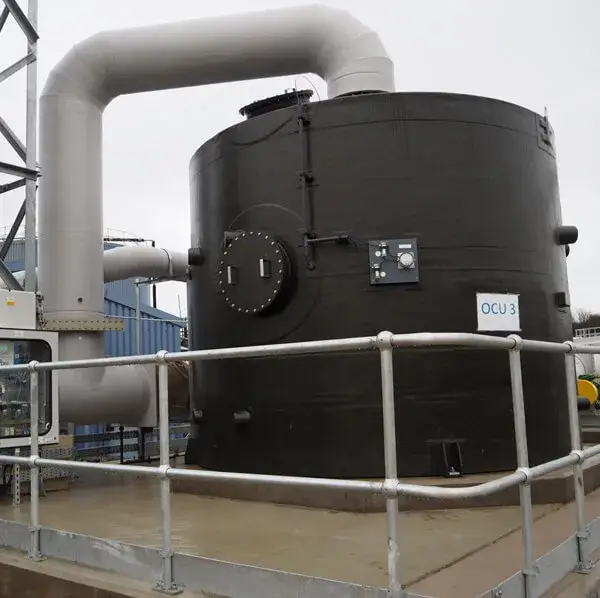
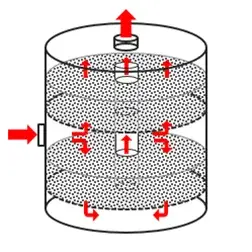
Dual Deep Bed Filters
Ideal for medium air flows 2,000 to 25,000 m3/hr
Suitable for use as a polishing filter or for bulk removal of odours
Very compact design with small pressure drop
Single or dual media
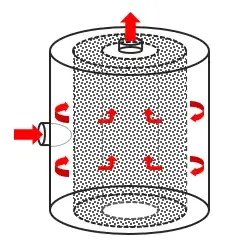
Annular Filters
Ideal for medium to large air flows 5,000 to 150,000 m3/hr
Suitable for use as a polishing filter
Very compact design with small pressure drop
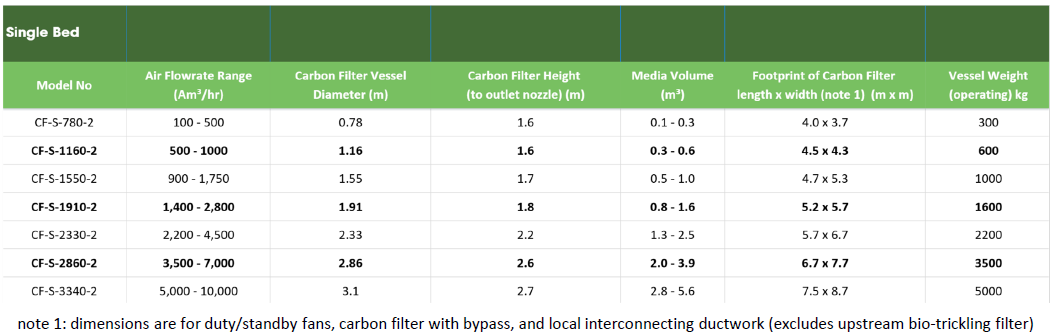
ERG Standard Carbon Filter Range
Deep Bed Filters
Dual Deep Bed Filters
Frequently asked questions
When should a carbon filter be used as a polishing stage rather than standalone
Carbon filters are often used as polishing stages downstream of bio‑trickling filters or chemical scrubbers where the upstream process removes the bulk of the contaminant loading and the carbon provides final H₂S and odour reduction to very low discharge concentrations. Standalone carbon filters are typically selected for lower flow, lower contaminant load duties, or where a compact, simple dry media solution is required without liquid effluent.
How is carbon media type and bed life determined?
Carbon media type and bed life are determined from the target contaminants (for example H₂S, mercaptans or VOCs), inlet concentrations, flowrate, required outlet concentration and acceptable pressure drop. Alkali‑impregnated carbon is used where H₂S and reduced sulphur compounds dominate, while activated carbon grades are used where VOC and odour polishing is the primary requirement; bed depth and contact time are then set to achieve the required performance and media replacement interval.
Maeve
Hi, I'm Maeve, ERG's virtual assistant.
Would you like to chat with an expert, or are you just browsing?
No problem. Feel free to look around — I'm here if you need me.
What is your enquiry about?
Great. Can you leave your details so the right person can get back to you?
Please give us a short description of your enquiry.
We'll only use your details to respond to your enquiry.
Sending your enquiry…
Thank you. One of our experts will contact you shortly.
Sorry, something went wrong sending your enquiry. Please try again in a moment.