Biological and Carbon Odour Control for Thames Water’s Long Reach Sewage Treatment Works
Project Overview
ERG Air Pollution Control supplied odour control equipment for AECOM for Thames Water at Long Reach Sewage Treatment Works.
Delivered in 2016, the project addressed the THP area and cake store, combining bio-trickling filters and carbon filters with the equipment needed to move, connect and discharge the treated air.
The documented scope included fans, ductwork, access platforms and stacks. This brought treatment technology, gas handling and maintenance access together within the equipment provision.
The Long Reach project demonstrates ERG’s experience supplying complementary odour treatment technologies for different areas of a sewage treatment works, supported by the infrastructure required to integrate them into the site.
The Challenge – Odour Treatment for Process and Storage Areas
Odour management at a sewage treatment works must consider where air is generated, how it is collected and which treatment processes are appropriate.
Process areas and cake storage can present different extraction requirements. Airflow, contaminant composition and operating patterns may vary, so equipment selection should begin with an understanding of each source.
The Long Reach project identified two application areas: the THP area and cake store. Treating air from these areas required consideration of both the odour removal process and the surrounding extraction arrangements.
A treatment vessel alone does not provide a complete odour control system. Fans must move the air, ductwork must connect the relevant equipment, and discharge arrangements must accommodate the treated stream.
Maintenance access also needs to be planned from the outset. Filters, fans and connections require inspection and servicing throughout their working life.
ERG’s Solution – Bio-Trickling Filters and Carbon Filters
ERG supplied bio-trickling filters and carbon filters as part of the project.
These technologies use different treatment mechanisms. Bio-trickling filtration relies on microorganisms supported on wetted media, while carbon treatment captures suitable contaminants through adsorption and, depending on the media, chemical reactions.
Using complementary technologies allows treatment duties to be matched to the characteristics of an air stream. The appropriate arrangement depends on the compounds present, their loading and the required outlet conditions.
For Long Reach, the source confirms that both technologies were included. It does not allocate individual filters to the THP area or cake store, so no particular treatment sequence or area-specific configuration is assigned.
How Bio-Trickling Filtration Works
A bio-trickling filter provides a wetted support surface on which a biological film develops.
As odorous air passes through the media, suitable contaminants transfer into the liquid film. Microorganisms then convert those substances through biological processes.
Effective operation depends on maintaining an environment appropriate to the biological community. Relevant considerations generally include moisture, pH, temperature, nutrient availability and contaminant loading.
Liquid distribution is important because the treatment process depends on contact with the wetted biological surface. Uneven wetting or air distribution can reduce effective use of the media.
These principles explain the technology supplied at Long Reach. They do not establish the particular contaminants, operating settings or removal performance of this installation.
The Role of Carbon Odour Treatment
Carbon filters provide a separate means of treating suitable gas-phase contaminants.
Activated carbon has an extensive internal pore structure that creates a large surface for adsorption. Specialist media may also use reactive properties to improve capture of selected substances.
Carbon selection must reflect the actual treatment duty. Contaminant identity, concentration, moisture and temperature can influence both performance and media life.
In some odour control applications, carbon treatment complements a biological process; in others, it serves a separate air stream. The Long Reach project sheet identifies carbon filters within the equipment supply without specifying their individual role.
For operators considering similar equipment, understanding that role is important when establishing monitoring, maintenance and media replacement requirements.
Fans, Ductwork and Discharge Stacks
Fans, ductwork and stacks formed part of ERG’s documented scope.
Fans provide the pressure needed to move air through the connected extraction and treatment equipment. Their selection must account for the required airflow and the resistance of the complete flow path.
Ductwork links the extraction points and treatment equipment. Its routing, connections and changes in direction influence pressure loss and the physical installation.
Stacks provide the discharge route for treated air. Their design should be considered alongside the gas handling system and the site’s discharge requirements.
At Long Reach, these components were supplied alongside the filters, demonstrating an equipment package that extended beyond the principal treatment vessels.
Engineering and Maintenance Access
The inclusion of access platforms made maintainability an explicit part of the project scope.
Biological filters and carbon filters have different servicing requirements, but both need practical access to relevant components. Media inspection, replacement activities and attention to connections should be considered when arranging the equipment.
Fans also require suitable working space for inspection and maintenance. Access provisions must therefore relate to the installed plant as a whole rather than only the filter vessels.
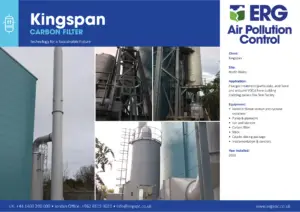
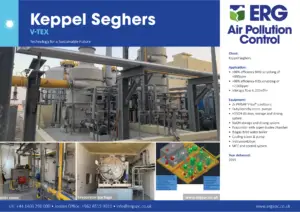
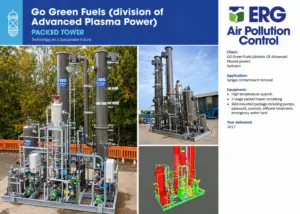
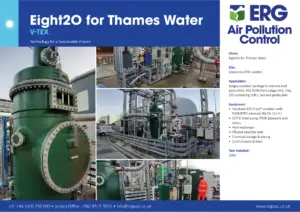
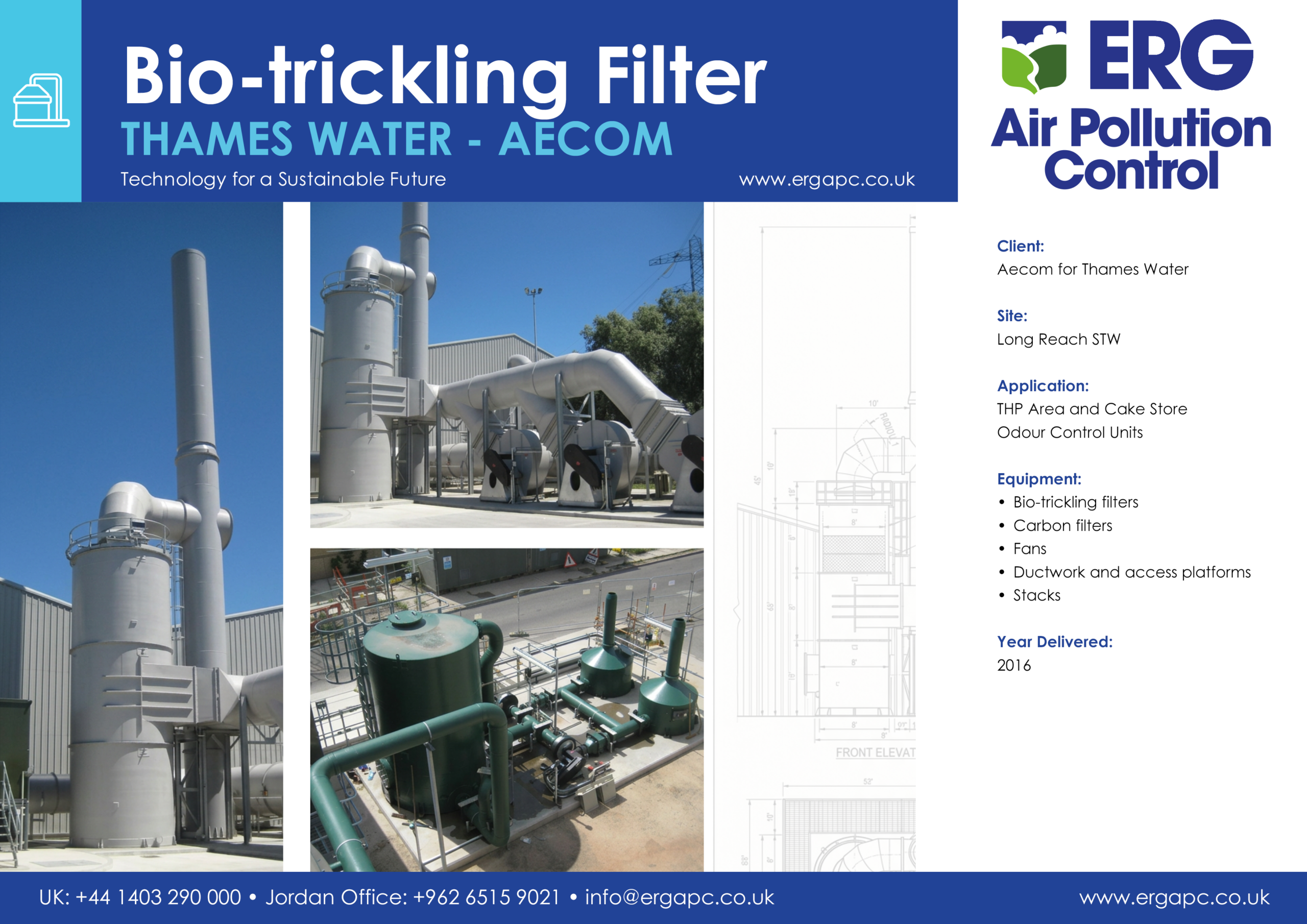
The project photographs show treatment vessels, connected ductwork, fans, platforms and tall discharge stacks. Together, they illustrate the coordination required between process equipment and its supporting structures.
Project Technical Specifications
| Parameter | Project details |
|---|---|
| Client | AECOM for Thames Water |
| End user | Thames Water |
| Site | Long Reach Sewage Treatment Works |
| Application areas | THP area and cake store |
| Treatment duty | Odour control |
| Biological equipment | Bio-trickling filters |
| Additional treatment | Carbon filters |
| Gas handling equipment | Fans and ductwork |
| Access provision | Access platforms |
| Discharge equipment | Stacks |
| Year delivered | 2016 |
Engineering Benefits
The documented project illustrates several aspects of ERG’s sewage treatment works odour control capability:
- Complementary treatment technologies: Biological filtration and carbon treatment were included in the supply.
- Coverage of different site areas: The application addressed the THP area and cake store.
- Integrated gas handling: Fans, ductwork and stacks accompanied the treatment equipment.
- Maintenance provision: Access platforms formed part of the recorded scope.
These features describe the project’s equipment and engineering relevance. No quantified odour reduction, operating savings or compliance outcomes are claimed.
ERG’s Expertise in Sewage Treatment Odour Control
The Long Reach project demonstrates ERG’s experience supplying odour treatment equipment together with the gas handling and access infrastructure needed for site integration.
Our capabilities include biological treatment, carbon adsorption and chemical scrubbing, with technology selection based on the air stream and required outcome. Inspection, maintenance and media management should also be considered when assessing a new installation or upgrading existing equipment.
For further information about sewage treatment works odour control, bio-trickling filters or carbon treatment systems, contact ERG Air Pollution Control.