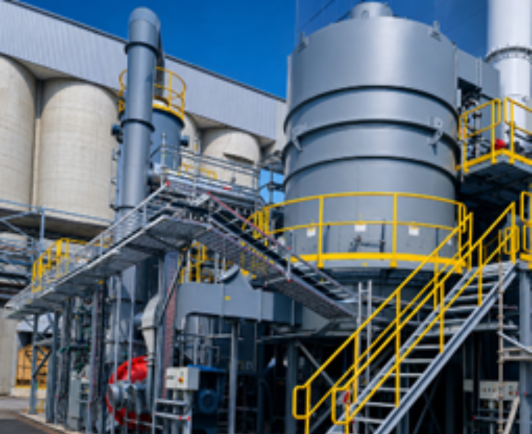
Vianode – Safe Thermal Oxidation of Hydrogen-Rich Battery Anode Process Emissions
ERG provided a specialist emissions control solution for Vianode AS at its lithium-ion battery anode material production facility in Norway. The project involved the treatment of challenging process exhaust streams containing high concentrations of hydrogen, methane and organic compounds, together with sticky pitch fumes and condensable contaminants.
The manufacturing process generated two principal exhaust streams. One originated from the calcination furnace, while the second came from the granulation and reactor processes. Each stream presented different technical and operational challenges, requiring an emissions treatment system capable of maintaining safe operation while achieving effective destruction of volatile organic compounds.
The calcination process produced hot exhaust gases at approximately *400°C, with hydrogen concentrations exceeding **15% by volume*. This combination of elevated temperature and high hydrogen content created a significant safety consideration that had to be carefully managed within the treatment system. The exhaust also contained pitch fumes and condensable compounds, which could potentially lead to fouling and blockage of downstream equipment if not effectively controlled.
The granulation and reactor processes generated additional emissions containing hydrogen, methane and asphalt-related fumes. These process gases also required reliable treatment to ensure safe operation and effective VOC destruction. Because of the composition of the streams, the overall system needed to address not only emissions performance but also combustion safety, equipment protection and long-term operational reliability.
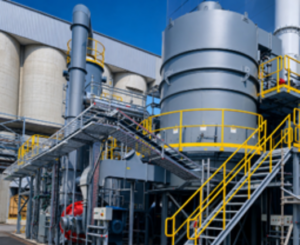
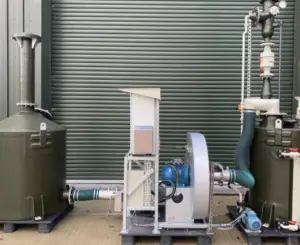
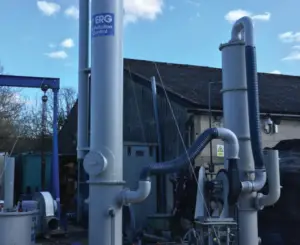
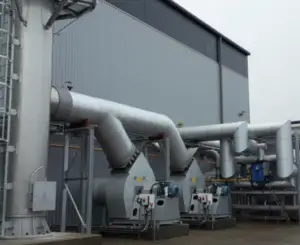
ERG’s solution incorporated two different thermal oxidation technologies designed around the individual process duties. A *500 Nm³/h direct-fired thermal oxidiser* was used alongside a larger *10,000 Nm³/h rotary regenerative thermal oxidiser (RTO)*. Together, these systems provided the thermal treatment capacity required for the separate exhaust streams generated by the battery anode manufacturing process.
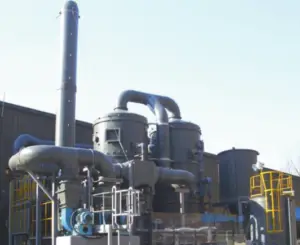
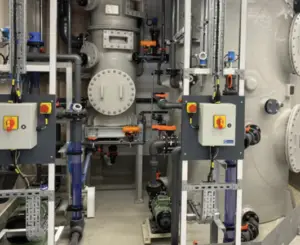
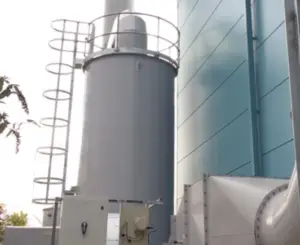
A number of additional safety and pre-treatment measures were also incorporated into the design. These included *nitrogen purging, **cyclone pre-treatment, a **static mixing scrubber* and an *emergency carbon adsorption system*. These supporting technologies were used to help control contaminants, protect downstream equipment and provide additional resilience within the overall emissions treatment process.
Nitrogen purging formed an important part of the safety strategy, particularly given the high hydrogen concentrations present in the exhaust gases. The system also incorporated measures to manage particulate and condensable material before it reached the main thermal oxidation equipment. This was particularly important because the pitch fumes associated with the process could otherwise contribute to fouling and operational disruption.
The project was engineered to comply with applicable *European CE standards and ATEX requirements*, reflecting the potentially explosive atmospheres associated with hydrogen-rich process gases. The system also had to operate reliably within Norway’s challenging climatic conditions, adding a further engineering consideration to the design and installation.
The Vianode project demonstrates how advanced thermal oxidation technology can be applied to complex emissions generated during lithium-ion battery material production. By combining direct-fired thermal oxidation, regenerative thermal oxidation and carefully selected pre-treatment and safety systems, ERG developed an integrated solution capable of managing hydrogen-rich process emissions while supporting reliable plant operation.
The result was a robust emissions control system designed around the specific characteristics of Vianode’s production process. The project highlights the importance of matching thermal oxidation technology to individual process streams, particularly where hydrogen, methane, VOCs, pitch fumes and condensable compounds are present together.
Overall, the installation provides Vianode with a comprehensive approach to emissions control, combining process safety, contaminant management, thermal treatment and regulatory compliance within a single engineered solution.