GSK
High-Efficiency Bromine and HCl Scrubbing for Pharmaceutical Manufacturing in Montrose
Project Overview
ERG Air Pollution Control supplied a specialist packed tower scrubbing system for GSK at its pharmaceutical manufacturing facility in Montrose, Scotland.
Delivered in 2013, the installation was designed to treat process vents from a bromination area, where batch operations generated gas streams containing bromine (Br₂), hydrogen chloride (HCl) and trace volatile organic compounds (VOCs).
The system was designed to handle gas flows of up to 1,300 m³/hr, with documented contaminant loadings of 1,600 g/m³ bromine and 1,100 g/m³ hydrogen chloride.
The original project specification identifies a removal efficiency exceeding 99.999%, reflecting the demanding treatment requirements associated with highly concentrated, corrosive process emissions.
ERG’s solution incorporated an ECTFE-lined GRP scrubber and sump, supported by ETFE-lined magnetic drive pumps, PFA-lined pipework and valves, a 316 stainless steel fan and associated instrumentation.
The equipment was supplied as a skid-mounted package with integral access, designed for integration with the site’s distributed control system (DCS).
The project demonstrates ERG’s experience in engineering high-performance acid gas scrubbing systems for pharmaceutical manufacturing applications.
The Challenge – Treating Bromination Process Emissions
Bromination is a chemical process used in pharmaceutical and fine chemical manufacturing, where bromine-containing reagents are introduced into chemical reactions.
Process vents associated with these operations can contain reactive halogen gases, acidic compounds and traces of organic solvents.
At GSK’s Montrose facility, the documented application involved batch scrubbing of process emissions from the bromination area.
The original case study specifies gas concentrations of 1,600 g/m³ bromine and 1,100 g/m³ hydrogen chloride, with trace VOCs also present.
These concentrations represent a demanding treatment duty, requiring careful consideration of contaminant loading, scrubbing chemistry, materials compatibility and equipment operating conditions.
The system was designed to accommodate gas flows of up to 1,300 m³/hr.
Because batch process emissions can vary during production, appropriate treatment system design must consider the expected range of operating conditions and peak contaminant loads.
ERG’s Solution – Packed Tower Wet Scrubbing
ERG supplied a packed tower scrubber designed for the treatment of the identified bromination process gases.
Packed tower scrubbers provide contact between contaminated gas and circulating scrubbing liquid through a bed of engineered packing material.
The packing increases the available surface area for gas-liquid interaction, allowing suitable contaminants to be absorbed or chemically treated.
Hydrogen chloride is highly soluble in water and can be removed using appropriate wet scrubbing arrangements.
Bromine treatment requires consideration of suitable scrubbing chemistry because of its reactive properties.
The selection of scrubbing liquid, circulation conditions and equipment materials is therefore important in applications involving both bromine and hydrogen chloride.
The GSK installation was specified for a removal efficiency exceeding 99.999%.
The original case study does not provide commissioning test results or outlet concentration measurements, so this figure is presented as the documented performance requirement.
Corrosion-Resistant Equipment Construction
Material selection was a significant feature of the project.
The scrubber and sump were manufactured from ECTFE-lined glass reinforced plastic (GRP), generally in accordance with BS EN 13121.
ECTFE is a fluoropolymer used in industrial applications requiring resistance to aggressive chemical environments.
The equipment package also incorporated ETFE-lined magnetic drive pumps and PFA-lined pipework and valves.
These materials provide options for handling chemically aggressive liquids, subject to the operating conditions and compatibility requirements of the process.
Magnetic drive pumps use a sealless drive arrangement, eliminating the conventional rotating shaft seal found in many centrifugal pumps.
The original case study identifies the equipment as PED Sound Engineering Practice (SEP).
The combination of fluoropolymer-lined components and GRP construction illustrates the importance of chemical compatibility in bromine and acid gas treatment.
Skid-Mounted Package and Process Integration
The GSK scrubber was supplied as a skid-mounted assembly incorporating integral access arrangements.
The equipment package included a 316 stainless steel fan, instrumentation and local junction boxes for connection to the site’s distributed control system.
DCS integration allows the gas treatment equipment to interface with the wider manufacturing process control infrastructure.
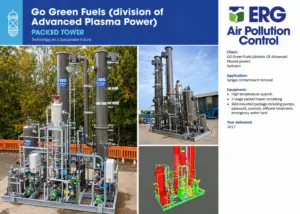
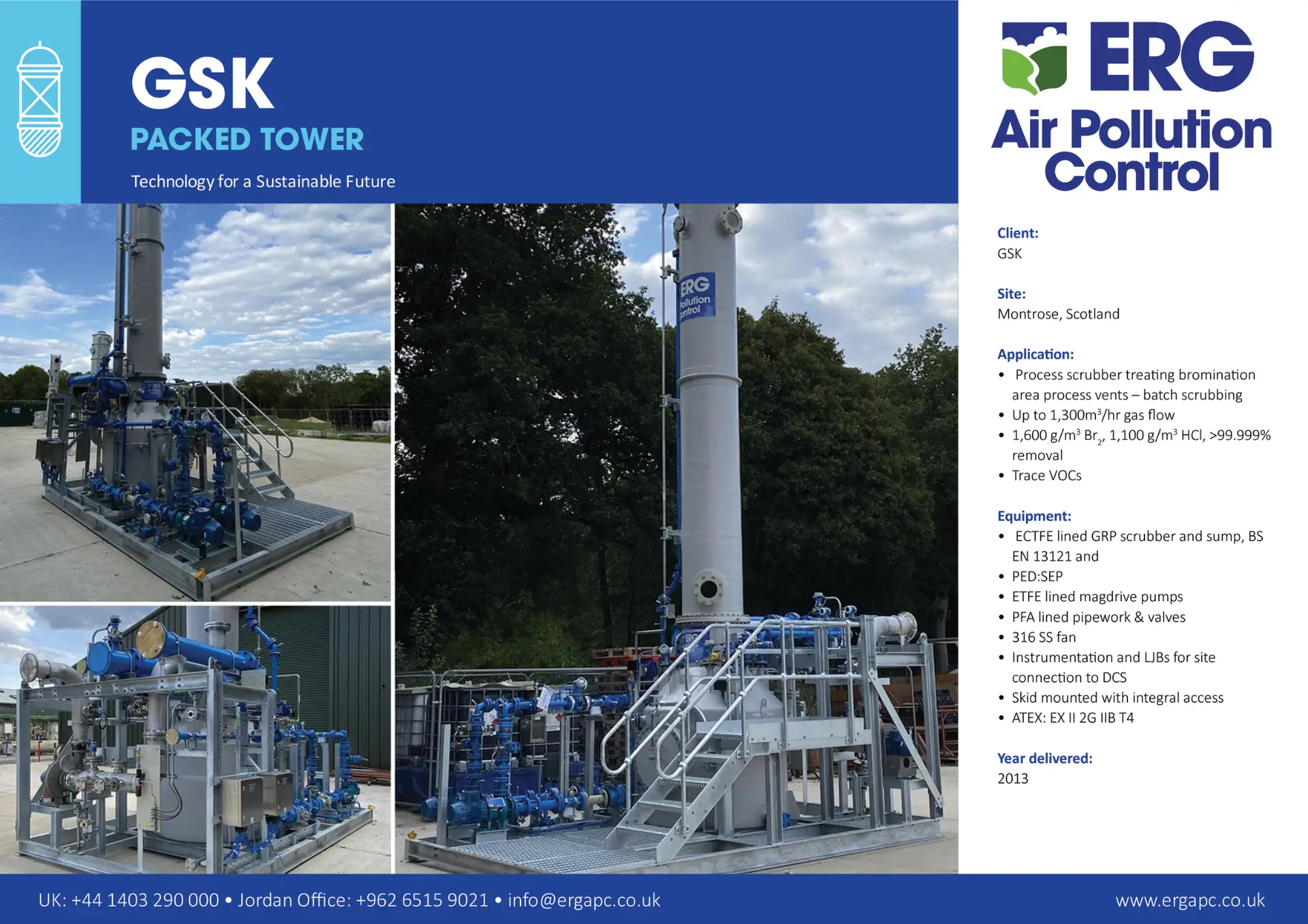
The original case study photographs show the vertical packed tower scrubber, supporting pipework, pumps, instrumentation, fan and access platforms assembled within a compact installation.
The skid-mounted arrangement provides an integrated equipment package suitable for connection to the site’s process ventilation system.
Hazardous Area Requirements
The original case study records an ATEX classification of EX II 2G IIB T4.
ATEX equipment classification is relevant where potentially explosive atmospheres may occur and suitable equipment protection measures are required.
The GSK installation incorporated equipment specified for the identified hazardous area requirements.
The original case study does not include the detailed hazardous area assessment or equipment certification documentation.
Project Specifications
| Parameter | Project detail |
|---|---|
| Client | GSK |
| Site | Montrose, Scotland |
| Industry | Pharmaceutical manufacturing |
| Application | Bromination process vent gas treatment |
| Process | Batch scrubbing |
| Design gas flow | Up to 1,300 m³/hr |
| Bromine concentration | 1,600 g/m³ Br₂ |
| Hydrogen chloride concentration | 1,100 g/m³ HCl |
| Additional contaminants | Trace VOCs |
| Specified removal efficiency | >99.999% |
| Primary technology | Packed tower wet scrubber |
| Scrubber construction | ECTFE-lined GRP |
| Vessel standard | BS EN 13121 |
| PED classification | Sound Engineering Practice (SEP) |
| Pumps | ETFE-lined magnetic drive |
| Pipework and valves | PFA-lined |
| Fan | 316 stainless steel |
| Controls | Instrumentation and junction boxes for DCS connection |
| Configuration | Skid-mounted with integral access |
| ATEX classification | EX II 2G IIB T4 |
| Year delivered | 2013 |
High-Efficiency Gas Scrubbing for Pharmaceutical Applications
Pharmaceutical and fine chemical manufacturers may require specialist gas treatment systems to manage corrosive process emissions containing halogens, acid gases and organic compounds.
Packed tower wet scrubbing can provide an appropriate treatment method for suitable soluble and chemically reactive contaminants.
However, the design of such systems depends on the gas composition, contaminant loading, required removal performance and process operating conditions.
Materials selection is particularly important where bromine and hydrogen chloride are present because of the corrosive nature of these substances.
The GSK installation provides an example of a packed tower scrubbing system specified for high-efficiency treatment of concentrated bromination process emissions.
ERG’s Experience in Pharmaceutical Gas Scrubbing
ERG Air Pollution Control designs and supplies engineered wet scrubbing systems for pharmaceutical, chemical and other industrial manufacturing applications.
Its technology portfolio includes packed tower scrubbers, Venturi scrubbers and specialist corrosion-resistant gas treatment equipment.
The GSK Montrose project demonstrates ERG’s experience in supplying integrated scrubbing packages for demanding pharmaceutical process applications.
Delivered in 2013, the installation provides a reference for treating bromine and hydrogen chloride emissions at gas flows of up to 1,300 m³/hr, with a specified removal efficiency exceeding 99.999%.
For further information about bromine gas treatment, hydrogen chloride scrubbing, packed tower scrubbers or pharmaceutical air pollution control systems, contact ERG Air Pollution Control.