Gas Cooling, Scrubbing and Carbon Filtration at Castle Cary
Project Overview
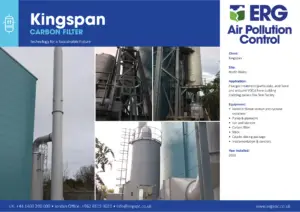
ERG Air Pollution Control supplied a gas treatment package for Crown Pet Foods at its Castle Cary site in Somerset. Delivered in 2008, the £900,000 project included a subcooler scrubber, air blast coolers and a carbon filter. The case sheet records a gas flow rate of 25,000 m³/h.
The equipment brought cooling, wet scrubbing and carbon filtration into the same project. Each serves a different purpose. Cooling changes the condition of the gas or liquid handled by the system, wet scrubbing brings the gas into contact with a treatment liquid, and carbon filtration captures suitable compounds from the air. The Castle Cary project illustrates how these functions can be considered together when treating extracted air at a pet food manufacturing site.
The Challenge – Matching Gas Conditioning to Air Treatment
Air temperature and moisture are important when selecting equipment for a manufacturing exhaust stream. In food and pet food applications, the conditions of extracted air can vary with the process it serves. That matters because cooling can change the amount of moisture carried as vapour, and both temperature and moisture can affect how a carbon filter performs.
At Castle Cary, the stated gas flow of 25,000 m³/h gave the project a defined air handling requirement. A treatment package at that flow needs to accommodate the air volume while providing suitable contact with scrubbing liquid and carbon media. The cooling equipment also needs to be considered alongside the treatment equipment so that the conditions at each interface suit the intended duty.
ERG’s Solution – Subcooler Scrubbing and Air Blast Cooling
The equipment supplied included a subcooler scrubber and air blast coolers. A subcooler scrubber combines gas cooling with contact between the gas and a liquid. Where cooling takes the gas below its dew point, some water vapour can condense. Wet scrubbing can also transfer suitable soluble compounds from the gas into the liquid. The extent of cooling, condensation and absorption depends on the incoming gas and the conditions within the scrubber.
Air blast coolers use ambient air to carry heat away from a heat exchanger. In a treatment package that uses a liquid circuit, this can provide a way to reject heat from the circulating liquid. The cooling available depends in part on the ambient air temperature and the heat load. That relationship matters when assessing how a system will operate across changing production and weather conditions.
The Castle Cary case sheet identifies both types of cooling equipment. Together, they make heat removal a clear part of the recorded equipment scope alongside scrubbing and filtration.
Carbon Filtration and System Integration
ERG’s supply also included a carbon filter. Carbon filtration works by adsorption. As air passes through the media, suitable gas-phase compounds adhere to the carbon’s extensive internal surface. Carbon grade, contact time and the conditions of the incoming air all influence the treatment capacity of the media.
Where cooling and carbon filtration are used together, moisture needs particular attention. Cooling can cause condensation, while the carbon filter needs air conditions suited to the chosen media. The equipment arrangement should therefore account for both the moisture remaining in the gas and any liquid that forms during cooling.
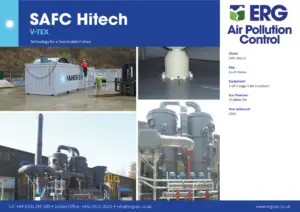
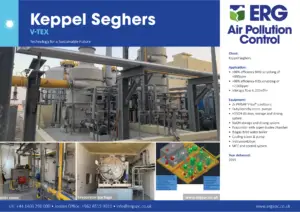
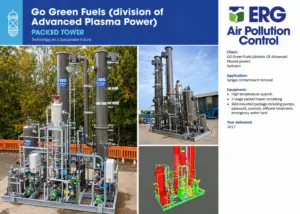
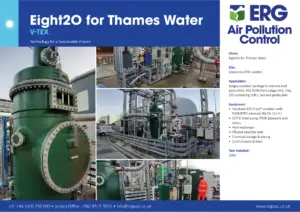
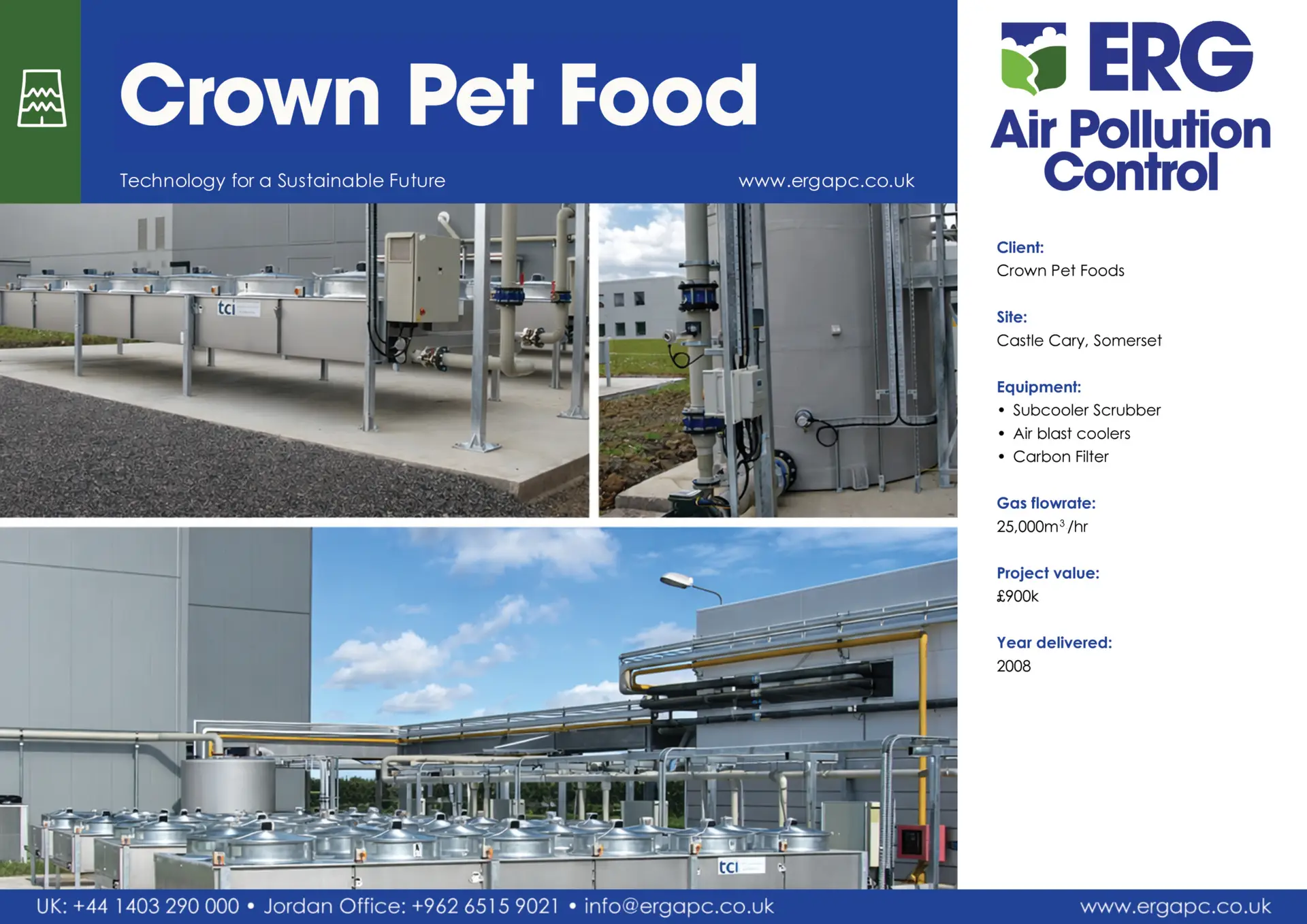
The project photographs show outdoor cooler banks, a vertical treatment vessel and connected pipework next to the factory buildings. For a comparable installation, the layout needs to leave room for airflow around the coolers, access to inspect the vessel and space to service the pipework and replace the carbon media.
Project Technical Specifications
Parameter | Project details |
Client | Crown Pet Foods |
Site | Castle Cary, Somerset |
Equipment scope | Subcooler scrubber, air blast coolers and carbon filter |
Stated gas flow rate | 25,000 m³/h |
Project value | £900,000 |
Year delivered | 2008 |
Engineering Benefits
- Gas conditioning and treatment in one package. The scope covered cooling, gas–liquid contact and carbon filtration.
- Dedicated heat rejection equipment. Air blast coolers provided a means of transferring heat to ambient air.
- Complementary treatment mechanisms. Wet scrubbing and carbon adsorption provided different ways to treat suitable compounds in extracted air.
ERG’s Expertise in Food and Pet Food Air Treatment
The Crown Pet Foods project demonstrates ERG’s experience supplying cooling, scrubbing and filtration equipment within a single industrial air treatment package. For similar projects, ERG can assess the extracted airflow, temperature, moisture and compounds present to determine which treatment functions the site needs and how the equipment can be integrated.
Contact ERG Air Pollution Control to discuss gas cooling, wet scrubbing or carbon filtration for a food or pet food manufacturing facility.