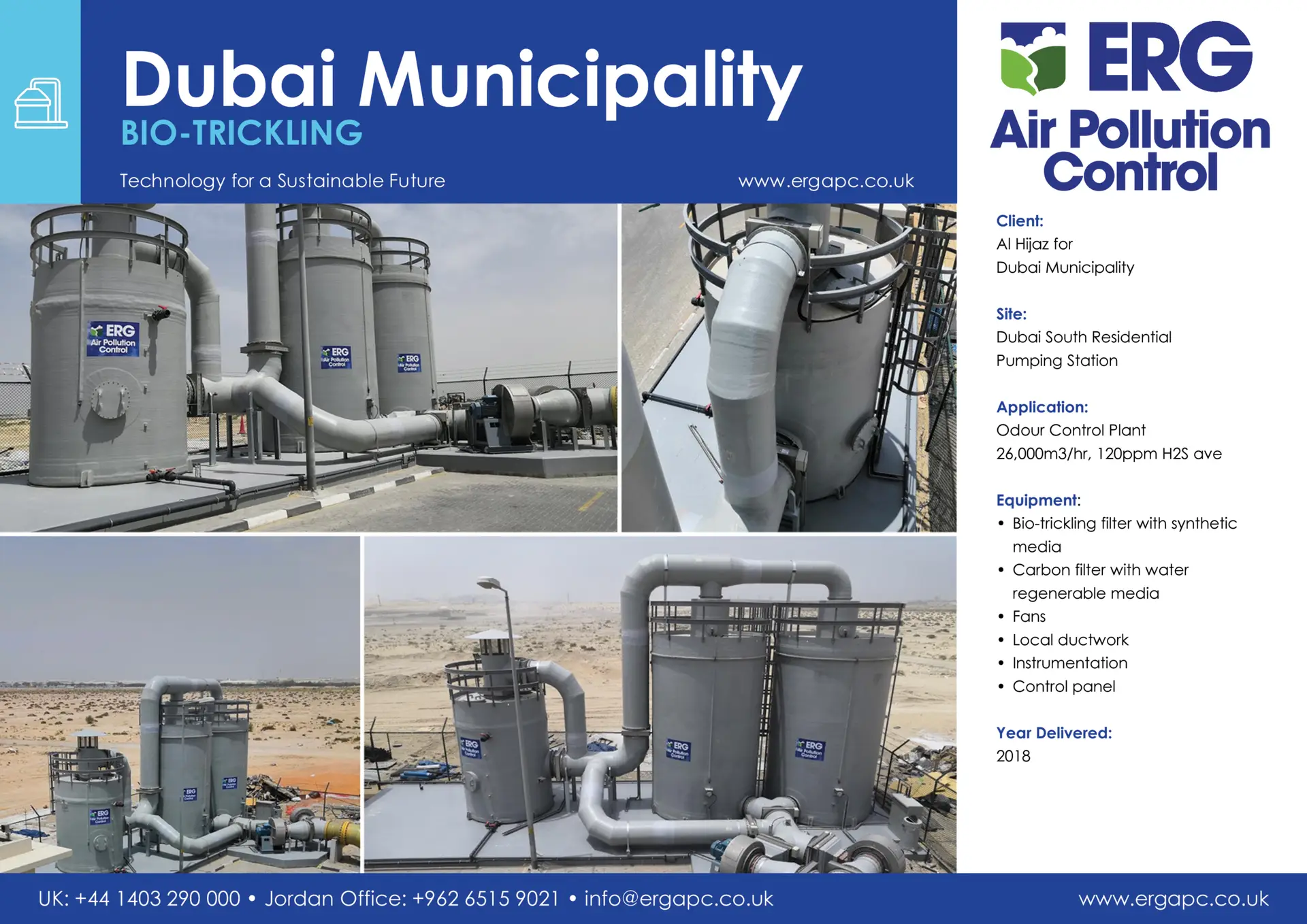
Biological and Carbon Odour Treatment for Dubai South Residential Pumping Station
Project Overview
ERG Air Pollution Control supplied an odour control plant for Al Hijaz for Dubai Municipality at Dubai South Residential Pumping Station.
Delivered in 2018, the project combined bio-trickling filtration using synthetic media with carbon filtration using water-regenerable media. The supplied package also included fans, local ductwork, instrumentation and a control panel.
The project sheet records an airflow of 26,000 m³/h and an average hydrogen sulphide (H₂S) concentration of 120 ppm. These figures establish the scale of the documented treatment application, combining a substantial extracted-air volume with a defined average contaminant concentration.
The installation demonstrates ERG’s experience bringing biological treatment, specialist carbon media and supporting gas handling equipment together for pumping station odour control.
The Challenge – Hydrogen Sulphide Treatment at a Residential Pumping Station
Pumping station odour control requires an approach that considers the source of the extracted air, its contaminant loading and the conditions under which treatment must operate.
Hydrogen sulphide is an important odorous compound in many pumping station applications. Biological treatment and carbon filtration offer different mechanisms for addressing suitable contaminants, making their selection and integration central to the overall process.
At Dubai South Residential Pumping Station, the recorded application involved 26,000 m³/h of air with an average H₂S concentration of 120 ppm.
Airflow and concentration must be considered together when assessing a treatment duty. Concentration alone does not establish the total contaminant load, while airflow alone does not describe the demands placed on the treatment media.
Average concentration also differs from peak concentration. For comparable projects, understanding fluctuations is important when establishing treatment capacity and operating requirements.
ERG’s recorded solution combined two treatment technologies with the fans, connections and controls needed to form an odour control plant.
ERG’s Solution – Bio-Trickling Filtration and Carbon Treatment
The equipment package included a bio-trickling filter with synthetic media and a carbon filter with water-regenerable media.
These technologies perform distinct functions. Bio-trickling filtration relies on microorganisms supported on wetted media, while carbon treatment captures suitable contaminants through adsorption and, depending on the selected media, chemical reactions.
Combining biological and carbon processes allows different treatment mechanisms to contribute to an odour control application. The allocation of duties depends on the gas composition, loading and required outlet conditions.
For Dubai South, both technologies are confirmed within the supplied package. The source does not define their individual removal duties, so no particular performance contribution is assigned to either stage.
How Bio-Trickling Filtration Treats Hydrogen Sulphide
A bio-trickling filter provides a surface on which a biological film can develop. As contaminated air passes through the media, hydrogen sulphide transfers into the wetted film and is biologically oxidised.
Synthetic media provide the support structure for this process. Their design must allow air passage and liquid distribution while providing a suitable surface for biological growth.
Treatment depends on maintaining conditions appropriate to the microorganisms. Relevant considerations generally include moisture, pH, nutrients, temperature and contaminant loading.
Liquid distribution is particularly important because the biological process occurs within a wetted environment. Uneven distribution can limit effective use of the available media.
The Dubai South project confirms synthetic media within the bio-trickling filter. The media specification and operating settings are not otherwise assigned beyond the supplied information.
Carbon Filtration with Water-Regenerable Media
The carbon filter incorporated water-regenerable media, a distinctive feature of the recorded equipment selection.
Carbon treatment uses the media’s internal surface and, where applicable, reactive properties to capture suitable gas-phase contaminants. Its effectiveness depends on matching the media to the substances present and the operating environment.
Water-regenerable media are intended to permit regeneration using water under defined conditions. This introduces a different media management approach from systems relying solely on removal and replacement after exhaustion.
Regeneration must be considered as an operating procedure, including water requirements, management of the resulting liquid and confirmation that the media remain suitable for continued service.
For this installation, the source establishes that water-regenerable media were supplied. It does not provide regeneration intervals, water consumption, media life or evidence of operating savings.
Engineering and System Integration
ERG’s scope included fans, local ductwork, instrumentation and a control panel alongside the treatment equipment.
The fans provide the means of moving air through the connected system. Their selection must account for the required flow and the resistance of the ductwork and treatment components.
Local ductwork connects the equipment and influences both pressure loss and air distribution. Its arrangement must also accommodate the physical layout and access requirements.
Instrumentation and a control panel support operation of the plant. For comparable biological and carbon systems, monitoring helps operators assess whether the equipment remains within its intended operating conditions.
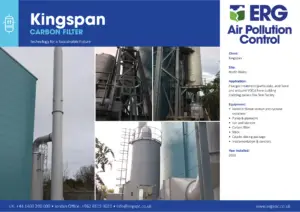
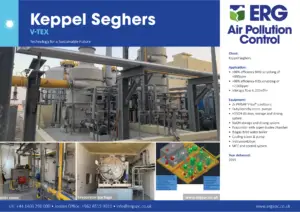
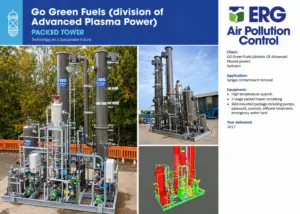
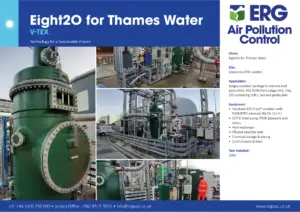
The project photographs show vertical treatment vessels, interconnected ductwork, fans, access ladders and upper-level platforms. These illustrate how process equipment and maintenance access were brought together within the installation.
Project Technical Specifications
| Parameter | Project details |
|---|---|
| Client | Al Hijaz for Dubai Municipality |
| End user | Dubai Municipality |
| Site | Dubai South Residential Pumping Station |
| Application | Odour control |
| Recorded airflow | 26,000 m³/h |
| Recorded average H₂S concentration | 120 ppm |
| Biological treatment | Bio-trickling filter |
| Biological support media | Synthetic media |
| Carbon treatment | Carbon filter with water-regenerable media |
| Gas handling equipment | Fans and local ductwork |
| Monitoring and controls | Instrumentation and control panel |
| Year delivered | 2018 |
Engineering Benefits
The Dubai South project demonstrates several aspects of ERG’s odour control capability:
- Complementary treatment mechanisms: Biological treatment and carbon filtration were included within the same plant.
- Defined application parameters: The source records airflow and average hydrogen sulphide concentration.
- Specialist media selection: Synthetic biological support media and water-regenerable carbon media were supplied.
- Integrated gas handling: Fans and local ductwork formed part of the equipment package.
- Operational provision: Instrumentation and a control panel accompanied the treatment equipment.
These are documented features of the supply. No unrecorded outlet concentrations, removal efficiencies or operating savings are claimed.
ERG’s Expertise in Pumping Station Odour Control
The Dubai Municipality project demonstrates ERG’s experience combining biological treatment, carbon filtration and associated equipment for pumping station applications.
Our odour control capabilities include bio-trickling filters, chemical scrubbers and carbon treatment systems, with technology selection based on the contaminant characteristics and required outcome. Equipment integration, access and ongoing maintenance requirements form part of that assessment.
For further information about pumping station odour control, biological hydrogen sulphide treatment or carbon filtration, contact ERG Air Pollution Control.