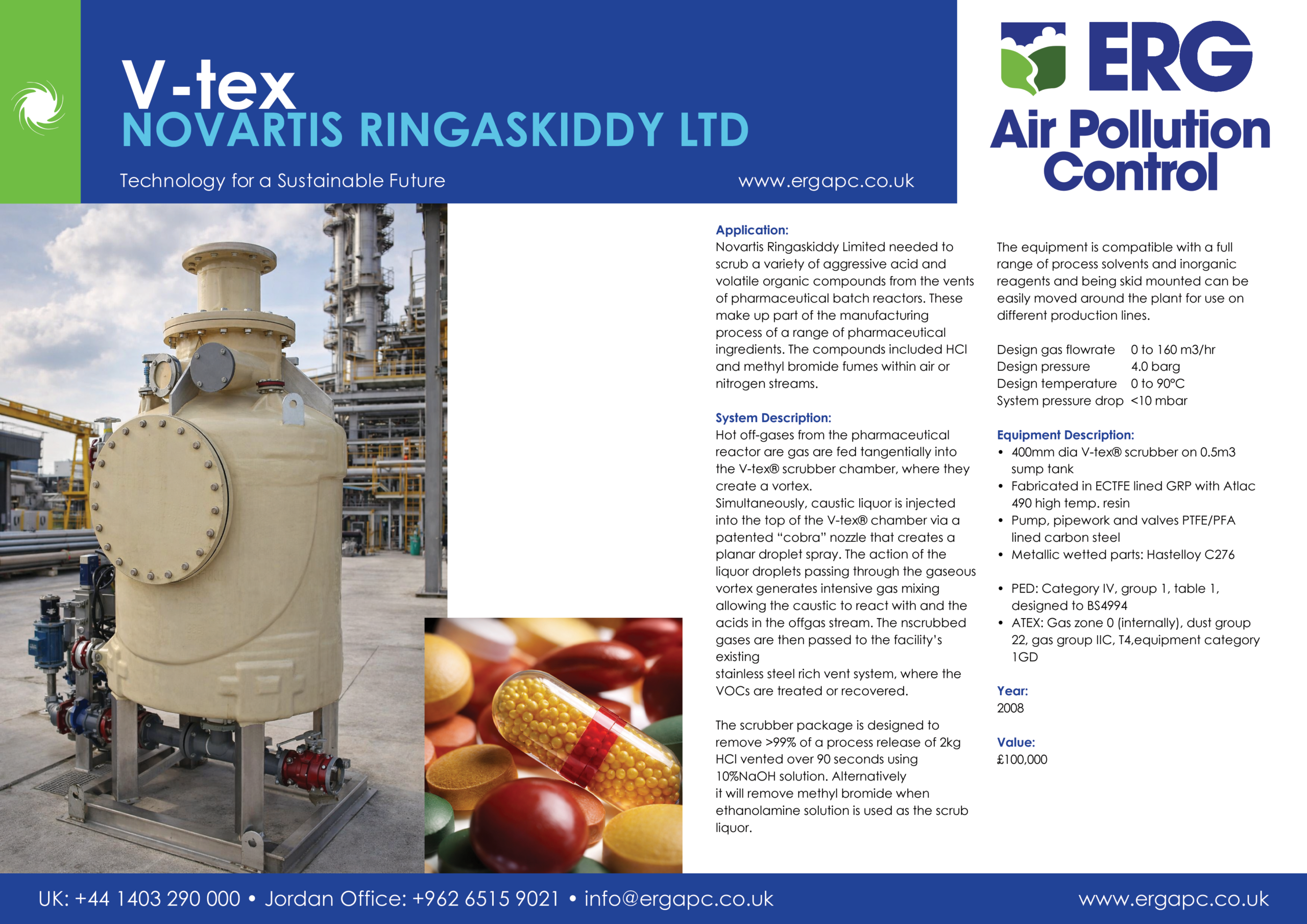
Pharmaceutical Batch Reactor Vent Scrubbing for Novartis Ringaskiddy
Project Overview
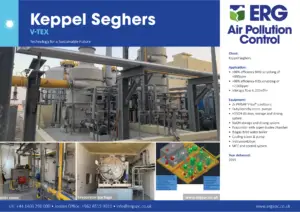
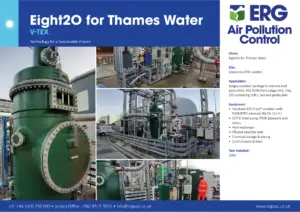
ERG Air Pollution Control supplied a skid-mounted V-tex® scrubber for Novartis Ringaskiddy Ltd to treat vent gases from pharmaceutical batch reactors. The £100,000 project, delivered in 2008, addressed hydrogen chloride (HCl) and methyl bromide fumes carried in air or nitrogen streams during pharmaceutical ingredient manufacture.
The scrubber was designed to remove more than 99% of a 2 kg HCl release vented over 90 seconds, using a 10% sodium hydroxide solution. The package could also be used for methyl bromide treatment with ethanolamine solution as the scrubbing liquor.
The skid-mounted design allowed the unit to be moved between production lines. After scrubbing, the gas passed to the facility’s existing stainless steel rich vent system for further treatment or recovery of volatile organic compounds (VOCs).
The Challenge – Treating Short Releases from Batch Reactors
A batch reactor scrubber needs to accommodate the conditions of an individual release as well as the overall gas flow. At Ringaskiddy, the HCl duty was defined by the mass released and the short period over which it was vented. The scrubber needed to provide sufficient contact between the gas and liquid during that event, with enough reactive capacity in the liquor to treat the release.
The equipment also needed to serve different production lines and two documented treatment duties. HCl and methyl bromide called for different scrubbing liquors, while the vessel, pump, pipework and valves needed to suit the process fluids they would encounter.
ERG’s Solution – V-tex® Vortex Scrubbing
Hot reactor off-gas entered the V-tex® chamber tangentially, creating a vortex. Scrubbing liquid was injected through a cobra nozzle at the top of the chamber, producing a flat spray of droplets. As the droplets passed through the rotating gas, the resulting mixing promoted contact between the two phases.
For HCl treatment, the gas transfers into the liquid and reacts with sodium hydroxide. The case sheet specifies 10% sodium hydroxide for the defined release of 2 kg over 90 seconds. For the alternative methyl bromide duty, it identifies ethanolamine solution as the scrubbing liquor.
The V-tex® package and the existing rich vent system performed separate duties. The scrubber treated the documented contaminants using the appropriate liquor, then passed the gas to the site’s stainless steel rich vent system, where VOCs were treated or recovered.
Engineering and Design – Materials, Pressure and Mobility
The package comprised a 400 mm diameter scrubber mounted on a 0.5 m³ sump tank. The scrubber was fabricated from glass-reinforced plastic (GRP) using Atlac 490 high-temperature resin, with an ECTFE fluoropolymer lining on the process side. The pump, pipework and valves were specified as PTFE/PFA-lined carbon steel, and metallic wetted parts were specified in Hastelloy C276.
Material compatibility extended through the liquid circuit. The scrubber vessel, pump and valves all came into contact with process fluids, so each component needed to suit its own chemical and mechanical duty. This was particularly relevant for equipment intended to use different scrubbing liquors across production lines.
The design gas flow range was 0–160 m³/h, and the design temperature range was 0–90°C. The case sheet gives a design pressure of 4.0 barg and a system pressure drop below 10 mbar. The design pressure describes the equipment’s pressure basis, while pressure drop describes the resistance the gas encounters as it passes through the package.
Mounting the unit on a skid made it possible to relocate it between production lines. For comparable applications, the receiving line’s vent connections, available space and treatment duty need to be considered when planning where the package will operate.
Project Technical Specifications
Parameter | Project details |
Client | Novartis Ringaskiddy Ltd |
Application | Pharmaceutical batch reactor vent treatment |
Documented contaminants | Hydrogen chloride and methyl bromide |
Carrier gas | Air or nitrogen |
Scrubber package | 400 mm diameter V-tex® scrubber on a 0.5 m³ sump tank |
Design gas flow | 0–160 m³/h |
Design pressure | 4.0 barg |
Design temperature | 0–90°C |
Stated system pressure drop | Below 10 mbar |
HCl design duty | Greater than 99% removal of a 2 kg release vented over 90 seconds |
HCl scrubbing liquor | 10% sodium hydroxide solution |
Alternative methyl bromide liquor | Ethanolamine solution |
Scrubber construction | ECTFE-lined GRP with Atlac 490 high-temperature resin |
Pump, pipework and valves | PTFE/PFA-lined carbon steel |
Metallic wetted parts | Hastelloy C276 |
Integration | Skid-mounted package connected to the existing stainless steel rich vent system |
Project year | 2008 |
Project value | £100,000 |
Engineering Benefits
- A design duty tied to the batch release. The HCl requirement specified both the mass released and the venting period.
- Flexibility across production lines. The skid-mounted package could be moved within the plant, with separate scrubbing liquors identified for the two treatment duties.
- Integration with existing VOC handling. The package discharged into the facility’s established rich vent system for downstream treatment or recovery.
ERG’s Expertise in Pharmaceutical Reactor Vent Treatment
The Ringaskiddy project illustrates how ERG combines gas–liquid contacting, scrubbing chemistry and specialist materials in a package that fits an existing vent system. For similar applications, ERG can assess the compounds present, the batch release profile and the site connections to define the equipment duty.
Contact ERG Air Pollution Control to discuss pharmaceutical reactor vent scrubbing, HCl treatment or a skid-mounted V-tex® package.