I&H Brown for Suez
Integrated Dust Filtration, Chemical Scrubbing and Carbon Odour Control for a Municipal Waste Transfer Station
Project Overview
ERG Air Pollution Control supplied an integrated odour control system for I&H Brown for Suez at a new municipal waste transfer station on Reliance Street in Manchester.
Delivered in 2021, the project involved the design, supply, installation and commissioning of a complete air treatment plant incorporating dust filtration, chemical scrubbing and activated carbon filtration.
The system was designed to manage odorous air extracted from the waste transfer facility, with a specified stack odour concentration of less than 1,000 European odour units per cubic metre (ouE/m³).
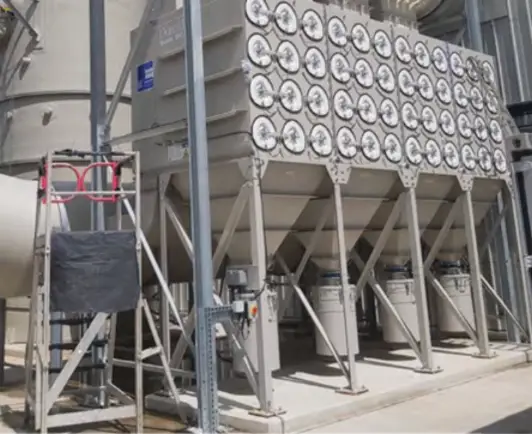
ERG’s equipment package included extraction ductwork and a fan, a dust filter, a chemical scrubber with associated chemical storage and dosing equipment, a carbon filter, discharge stack and instrumentation.
The combination of treatment technologies provides a multi-stage approach to controlling dust and odorous emissions from municipal waste handling operations.
The project demonstrates ERG’s experience in delivering complete industrial odour control systems for waste management and environmental infrastructure applications.
The Challenge – Odour and Dust from Municipal Waste Handling
Municipal waste transfer stations receive, consolidate and transfer waste before it is transported for further processing, recycling or disposal.
Waste handling activities can generate airborne dust and odorous emissions, particularly where mixed waste materials are unloaded, stored or moved within enclosed buildings.
The composition of the extracted air can vary depending on the waste received, handling operations, ventilation arrangements and operating conditions.
For the new waste transfer station on Reliance Street, Manchester, the project required an engineered air treatment system designed to control odorous emissions from the facility.
The original case study identifies a stack odour concentration requirement of less than 1,000 ouE/m³.
Meeting an odour concentration target requires consideration of the contaminants present, the characteristics of the extracted air and the selection of appropriate treatment technologies.
The original case sheet does not specify the design air flow rate, inlet odour concentration or individual contaminant concentrations.
ERG’s Solution – Multi-Stage Air Treatment
ERG supplied a complete odour control plant combining dust filtration, chemical scrubbing and carbon filtration.
The arrangement brings together complementary treatment technologies to address different characteristics of the extracted air stream.
Dust Filtration
The dust filter provides a particulate removal stage within the treatment system.
Airborne dust can be generated during waste unloading, movement and handling. Removing particulate matter helps reduce the dust burden passing into downstream gas treatment equipment.
Dust filtration is therefore an important consideration in waste transfer applications where extracted air may contain suspended solids.
Chemical Scrubbing
The chemical scrubber provides a wet treatment stage for suitable odorous gaseous contaminants.
Chemical scrubbing uses contact between contaminated air and a circulating liquid to absorb or chemically react with target compounds.
The original project scope included chemical storage and dosing equipment, allowing the scrubbing process to be supplied with the required treatment chemicals.
The case study does not identify the specific scrubbing chemicals or individual contaminants targeted.
Activated Carbon Filtration
The carbon filter provides a further odour treatment stage within the system.
Activated carbon contains a highly porous structure that can adsorb a range of gaseous contaminants, depending on their properties and the selected carbon media.
Carbon filtration is frequently used in odour control applications as a polishing stage to reduce residual odorous compounds following upstream treatment.
The combined treatment arrangement was designed around the project’s specified stack odour concentration requirement.
Extraction, Ventilation and Discharge
The equipment package included extraction ductwork and a fan to move contaminated air from the waste transfer facility through the treatment plant.
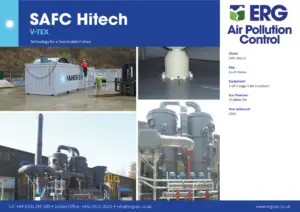
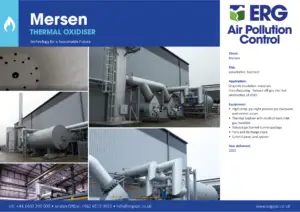
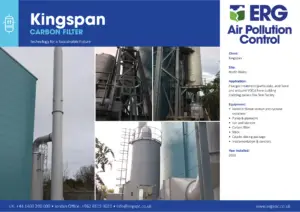
The original project photographs show large external ductwork, filtration equipment, treatment vessels, fan equipment and a vertical discharge stack.
The installation demonstrates the scale of the mechanical equipment required to integrate an odour control system with a municipal waste handling building.
The discharge stack forms the final element of the air treatment arrangement, providing a defined discharge point for treated air.
The original case study does not specify the stack height or discharge velocity.
Complete Design, Installation and Commissioning Scope
ERG’s documented responsibility extended beyond equipment supply.
The project included design, supply, installation and commissioning of the odour control plant.
This scope required the integration of multiple treatment technologies and supporting equipment into a single installation.
The system included instrumentation to support operation and monitoring of the treatment equipment.
The original case study does not provide detailed control logic, monitoring arrangements or commissioning performance measurements.
Project Specifications
| Parameter | Project detail |
|---|---|
| Client | I&H Brown for Suez |
| Site | Reliance Street, Manchester, UK |
| Industry | Municipal waste management |
| Facility | New municipal waste transfer station |
| Application | Odour control for waste handling operations |
| Stack odour requirement | <1,000 ouE/m³ |
| Treatment technology | Dust filtration, chemical scrubbing and carbon filtration |
| Extraction equipment | Ductwork and fan |
| Chemical treatment | Chemical scrubber with storage and dosing package |
| Final treatment | Carbon filter |
| Discharge | Stack |
| Instrumentation | Included |
| ERG scope | Design, supply, installation and commissioning |
| Year delivered | 2021 |
Odour Control for Waste Transfer Stations
Waste transfer stations require effective management of airborne emissions to minimise the environmental impact of waste handling operations.
The selection of odour control technology depends on the nature of the waste, extraction air characteristics, dust loading, odorous compounds and site-specific emission requirements.
Multi-stage treatment systems can be appropriate where the extracted air contains a combination of particulate matter and gaseous odour contaminants.
Dust filtration, chemical scrubbing and activated carbon treatment each perform different functions within the overall air pollution control process.
The Manchester installation provides an example of an integrated treatment arrangement designed to address these requirements within a municipal waste transfer facility.
ERG’s Experience in Waste Management Odour Control
ERG Air Pollution Control designs, supplies and installs engineered odour control systems for municipal waste facilities, wastewater treatment plants and industrial applications.
Its technology portfolio includes chemical scrubbers, activated carbon filters, biological treatment systems and specialist particulate removal equipment.
The I&H Brown for Suez project demonstrates ERG’s capability to deliver a complete, multi-stage odour control plant incorporating extraction, filtration, chemical treatment, carbon polishing and final discharge.
Delivered in 2021, the installation provides a reference for a municipal waste transfer station odour control system designed to achieve a stack odour concentration below 1,000 ouE/m³.
For further information about waste transfer station odour control, chemical scrubbers, activated carbon filters or integrated industrial air treatment systems, contact ERG Air Pollution Control.