Veolia Water
Large-Capacity Ductwork System for Veolia Water at Duncrue
Project Overview
ERG Air Pollution Control delivered an industrial ductwork project for Veolia Water at Duncrue in 2014.
The project involved ductwork associated with an air handling system with a documented gas flow rate of 31,500 m³/hr.
With a recorded project value of £350,000, the installation demonstrates ERG’s experience in supplying engineered ductwork for large-volume air handling applications within the water industry.
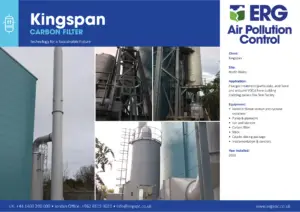
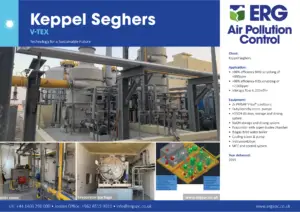
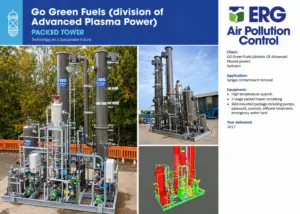
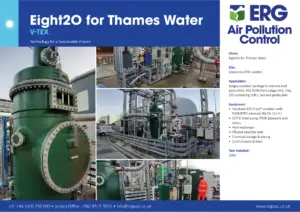
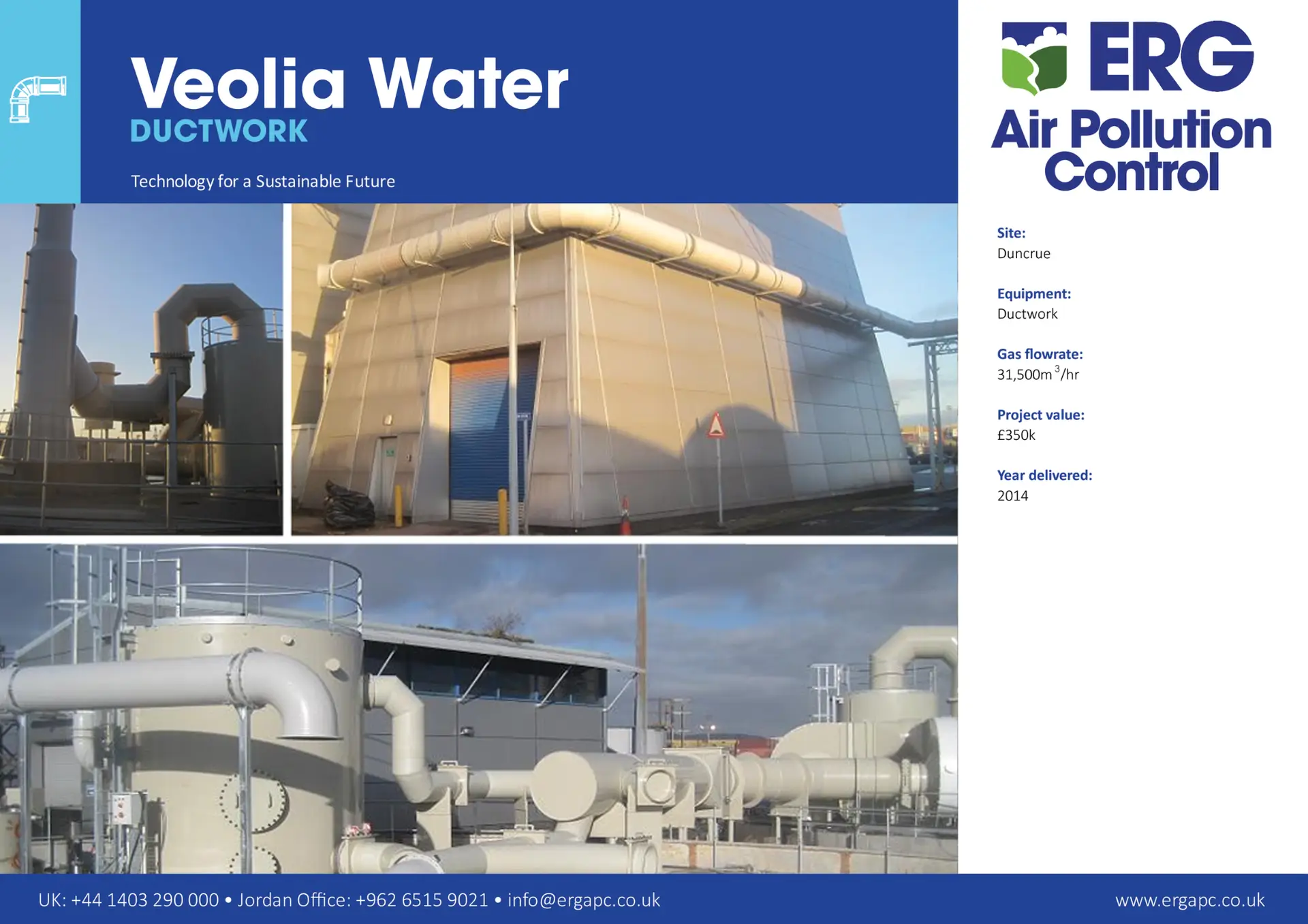
The original project photographs show extensive external ductwork routed around industrial buildings and connected to large treatment vessels and associated equipment.
The installation illustrates the importance of ductwork engineering in connecting air extraction and treatment infrastructure across an operational industrial site.
The Challenge – Managing Large Air Volumes
Industrial air handling and odour control systems rely on ductwork to convey extracted air between process areas, ventilation equipment and treatment systems.
For water and wastewater facilities, ductwork may need to connect multiple buildings or process areas with centralised treatment equipment.
The routing and integration of large ductwork systems can present engineering challenges, particularly where existing structures, access requirements and equipment connections must be accommodated.
At Duncrue, the documented gas flow rate was 31,500 m³/hr.
This represents a substantial air volume requiring appropriately engineered ductwork to convey the gas stream through the associated system.
The original case study does not specify the ductwork material, operating pressure, air velocity, duct diameters or detailed extraction arrangement.
ERG’s Solution – Engineered Industrial Ductwork
ERG’s documented equipment scope comprised ductwork.
Industrial ductwork provides the physical connection between air extraction points, fans, treatment equipment and discharge arrangements.
The design of ductwork for high-volume air handling applications requires consideration of factors such as airflow, pressure losses, routing, support arrangements and equipment interfaces.
For the Duncrue project, the original photographs show substantial external ductwork incorporating horizontal runs, vertical sections, bends and connections to process equipment.
The ductwork is routed around buildings and across external plant areas, illustrating the complexity that can be involved in integrating air conveyance systems with industrial infrastructure.
The original documentation does not identify whether ERG was responsible for the associated fans or treatment vessels, so these are not included in the confirmed supply scope.
Ductwork Integration with Air Treatment Equipment
Ductwork plays an essential role in the performance of an industrial air treatment installation.
Even where the primary treatment technology is supplied separately, the air conveyance system must be compatible with the operating requirements of the wider plant.
Appropriate ductwork design helps maintain the required airflow while managing pressure losses and providing reliable connections between equipment.
In wastewater applications, the properties of the extracted air may also influence the selection of construction materials and the design of joints and connections.
The Duncrue installation demonstrates the physical scale of ductwork associated with a 31,500 m³/hr air handling system.
The photographs provide a useful visual reference for ERG’s experience in large industrial ductwork installations.
Project Specifications
| Parameter | Project detail |
|---|---|
| Client | Veolia Water |
| Site | Duncrue |
| Industry | Water and wastewater |
| Application | Industrial air handling ductwork |
| Equipment | Ductwork |
| Gas flow rate | 31,500 m³/hr |
| Project value | £350,000 |
| Year delivered | 2014 |
The Importance of Ductwork in Odour Control Systems
Air extraction and ductwork are fundamental components of many industrial and wastewater odour control installations.
A treatment system depends on the effective collection and conveyance of contaminated air from the source to the treatment equipment.
Ductwork must therefore be considered as part of the overall air handling arrangement rather than as an isolated mechanical component.
In larger installations, routing may involve long horizontal sections, changes in elevation, multiple bends and connections to existing equipment.
These requirements can influence pressure losses, fan selection, maintenance access and the physical arrangement of the installation.
The Duncrue project provides an example of the scale and complexity associated with industrial ductwork serving a high-volume air handling application.
ERG’s Experience in Industrial Air Handling and Ductwork
ERG Air Pollution Control designs and supplies engineered air pollution control systems for wastewater treatment, municipal infrastructure and industrial applications.
Its capabilities include ductwork and air extraction systems alongside chemical scrubbers, biological treatment equipment and activated carbon filtration.
The Veolia Water Duncrue project demonstrates ERG’s experience in delivering large-capacity ductwork associated with industrial air treatment infrastructure.
Delivered in 2014, the £350,000 project provides a reference for ductwork serving a documented gas flow rate of 31,500 m³/hr.
For further information about industrial ductwork, wastewater air extraction systems or integrated air pollution control equipment, contact ERG Air Pollution Control.