Southern Water
Biological Odour Control Using a Pumice Stone Bio-Trickling Filter at Eden Vale
Project Overview
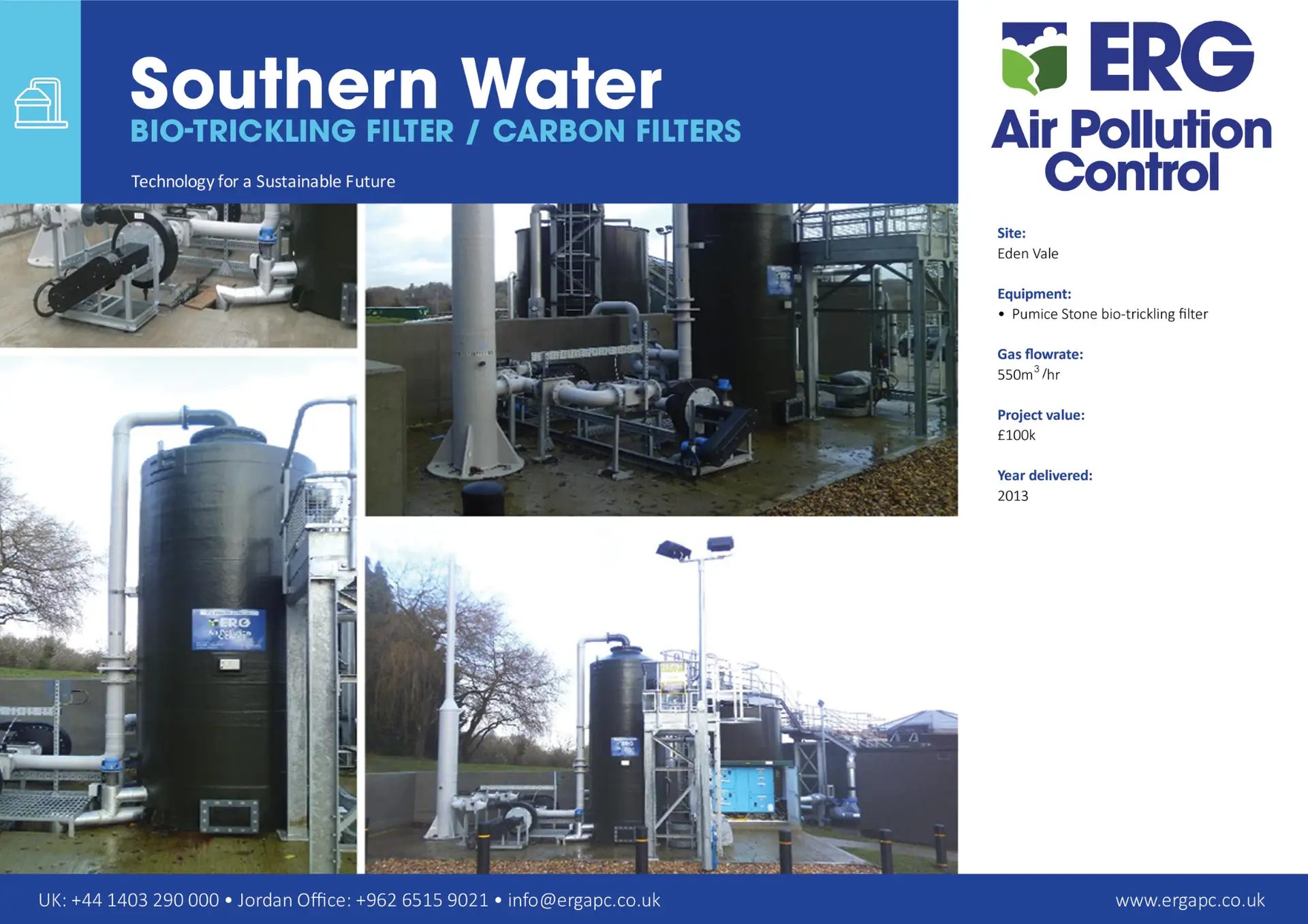
ERG Air Pollution Control supplied a biological air treatment system for Southern Water at Eden Vale, incorporating a pumice stone bio-trickling filter designed to treat an extracted air flow of 550 m³/hr.
Delivered in 2013, the project provides an example of ERG’s experience in biological odour control technology for the water and wastewater sector.
The original case study identifies the installation under the technology category of bio-trickling filtration and carbon filters, with a pumice stone bio-trickling filter specifically listed in the equipment scope.
The documented project value was approximately £100,000.
Bio-trickling filters use biological processes to treat suitable gaseous contaminants by bringing contaminated air into contact with a wetted media surface supporting microbial activity.
The Southern Water Eden Vale installation demonstrates the application of this technology within a compact engineered air treatment system.
The Challenge – Managing Odorous Air in Wastewater Applications
Wastewater treatment and associated water industry operations can generate odorous air streams requiring controlled extraction and treatment.
Depending on the process, these emissions may contain hydrogen sulphide (H₂S), reduced sulphur compounds and other biodegradable odorous substances.
The composition and concentration of contaminants vary between sites and depend on the characteristics of the wastewater, process conditions and ventilation arrangements.
For the Southern Water Eden Vale project, the documented treatment capacity was 550 m³/hr.
The original case study does not identify the specific odorous contaminants, inlet concentrations, outlet odour requirements or removal efficiency.
The treatment system therefore needs to be described in terms of its confirmed technology and design air flow, rather than attributing unverified performance figures to the installation.
ERG’s Solution – Pumice Stone Bio-Trickling Filtration
ERG supplied a pumice stone bio-trickling filter as the principal documented treatment equipment.
A bio-trickling filter is a biological gas treatment system in which contaminated air passes through a packed bed supporting microorganisms.
A circulating liquid maintains the conditions needed for biological activity and allows suitable soluble contaminants to transfer from the gas stream into the wetted media.
Microorganisms within the biofilm can then break down biodegradable compounds under appropriate operating conditions.
Pumice stone provides a mineral-based packing material with a porous structure and surface area suitable for supporting biological growth.
Its use within a bio-trickling filter provides a contact medium for the biological treatment process.
The effectiveness of bio-trickling filtration depends on factors including gas composition, contaminant loading, moisture, nutrient availability, pH and contact time.
The Eden Vale system was designed around the documented gas flow rate of 550 m³/hr.
Biological Odour Treatment and Process Operation
Biological odour control offers an alternative to chemical scrubbing or adsorption-based treatment for suitable biodegradable contaminants.
Unlike chemical scrubbers that rely on chemical reagents to react with target compounds, bio-trickling filters use microbial processes to transform contaminants.
The treatment medium must be maintained under conditions that support the microbial population.
Liquid circulation, moisture management and appropriate operating conditions are therefore important elements of biological filter design.
For wastewater odour applications, bio-trickling filters can be used to treat suitable compounds such as hydrogen sulphide, although the original Eden Vale case study does not specify which contaminants were present.
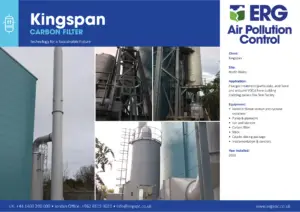
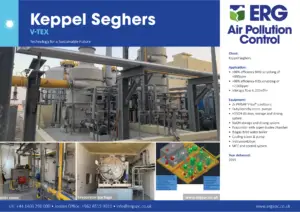
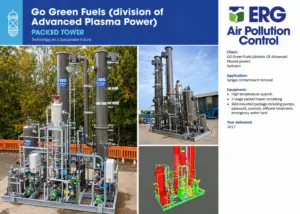
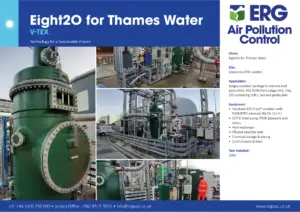
The original project photographs show vertical treatment vessels, associated pipework, air movement equipment and access structures.
These images illustrate the integration of biological treatment equipment into an external industrial installation.
Bio-Trickling Filtration and Carbon Treatment
The original case study is headed “Bio-Trickling Filter / Carbon Filters”.
Biological treatment and activated carbon filtration can be used together in odour control applications, with carbon providing an additional adsorption stage where required.
Activated carbon filters use porous carbon media to capture suitable gaseous contaminants from an air stream.
In combined treatment systems, biological filtration may provide the primary contaminant reduction stage, with activated carbon used for further treatment of residual odorous compounds.
However, the Eden Vale equipment list specifically identifies only the pumice stone bio-trickling filter.
The original document does not provide sufficient detail to confirm the configuration, quantity or operating duty of any carbon filters.
Project Specifications
| Parameter | Project detail |
|---|---|
| Client | Southern Water |
| Site | Eden Vale |
| Industry | Water and wastewater |
| Application | Biological air treatment / odour control |
| Technology category | Bio-trickling filter / carbon filters |
| Confirmed equipment | Pumice stone bio-trickling filter |
| Gas flow rate | 550 m³/hr |
| Project value | £100,000 |
| Year delivered | 2013 |
Bio-Trickling Filters for Wastewater Odour Control
Bio-trickling filters are used in wastewater and industrial applications where extracted air contains contaminants suitable for biological treatment.
The technology can provide a treatment option for certain odorous compounds without relying solely on continuous chemical reagent dosing.
System selection depends on the contaminant characteristics, air flow rate, treatment requirements and site operating conditions.
The choice of packing material is also important because it influences available surface area, liquid distribution and the environment supporting microbial activity.
Pumice stone is one option for biological filter media, providing a porous surface for biofilm development.
The Southern Water Eden Vale project provides an example of a relatively small-capacity biological treatment installation, with a documented gas flow of 550 m³/hr.
ERG’s Experience in Biological Odour Control
ERG Air Pollution Control designs and supplies engineered odour control systems for wastewater treatment facilities, municipal infrastructure and industrial applications.
Its technology portfolio includes bio-trickling filters, biological filters, chemical scrubbers and activated carbon treatment systems.
The Southern Water Eden Vale installation demonstrates ERG’s experience in applying biological gas treatment technology within the UK water sector.
Delivered in 2013, the project provides a reference for a pumice stone bio-trickling filter designed for an air flow of 550 m³/hr.
For further information about bio-trickling filters, biological odour control or wastewater air treatment systems, contact ERG Air Pollution Control.