4 Delivery Ltd
Biological and Activated Carbon Odour Control for Southern Water at Goddard’s Green
Project Overview
ERG Air Pollution Control supplied two odour control systems for 4 Delivery Ltd, working on behalf of Southern Water, at Goddard’s Green in the UK.
Delivered in 2012, the £275,000 project incorporated pumice stone bioscrubbing followed by activated carbon filtration, together with the associated ductwork, fans, instrumentation and control equipment.
The installation was designed for a recorded gas flow rate of 1,300 m³/hr and demonstrates ERG’s experience in combining biological treatment and carbon filtration within an integrated wastewater odour control package.
The Challenge – Controlling Odorous Air at Wastewater Facilities
Wastewater treatment facilities can generate odorous emissions during the collection, handling and treatment of sewage.
Hydrogen sulphide (H₂S), reduced sulphur compounds and other biodegradable substances are among the contaminants that may be present in wastewater-related air streams.
Managing these emissions requires suitable air extraction and treatment equipment, particularly where odorous air is collected from enclosed or partially enclosed process areas.
For the Goddard’s Green project, ERG supplied two odour control systems incorporating biological and activated carbon treatment.
The original project documentation records a gas flow rate of 1,300 m³/hr but does not specify whether this represents the combined capacity or the capacity of an individual system.
It also does not identify the individual emission sources, contaminant concentrations or required removal efficiencies.
ERG’s Solution – Pumice Stone Bioscrubbing and Carbon Filtration
The documented treatment arrangement incorporated a pumice stone bioscrubber followed by a carbon filter.
This configuration combines biological treatment with adsorption-based filtration, providing complementary mechanisms for removing suitable odorous compounds.
Pumice Stone Bioscrubbing
A bioscrubber uses biological activity to treat suitable contaminants within an extracted air stream.
Pumice stone can provide a durable, porous support medium for microorganisms involved in biological treatment.
As contaminated air passes through a suitably operated biological treatment system, biodegradable compounds can transfer into the wetted media and be broken down by microorganisms.
The performance of biological treatment depends on operating conditions such as moisture, contaminant loading, pH and contact time.
The use of pumice stone provides a mineral-based support medium within the biological treatment process.
Activated Carbon Filtration
Following biological treatment, the documented system incorporated activated carbon filtration.
Activated carbon uses its porous structure to adsorb suitable gaseous contaminants.
In wastewater odour control applications, carbon filtration can provide additional treatment for residual odorous compounds remaining after an upstream biological process.
The combination of bioscrubbing and activated carbon allows biological degradation and physical adsorption to be incorporated within one treatment arrangement.
The original case study does not specify the carbon media type, individual treatment efficiencies or operating parameters.
Mechanical Equipment and System Integration
ERG’s equipment scope included ductwork, fans, a control panel and instrumentation.
Fans provide the airflow needed to convey extracted air through the treatment equipment, while ductwork connects the relevant process areas to the odour control systems.
The control panel and instrumentation support operation and management of the installed plant.
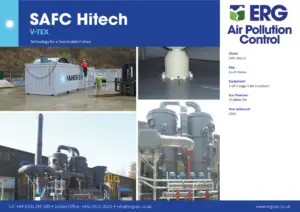
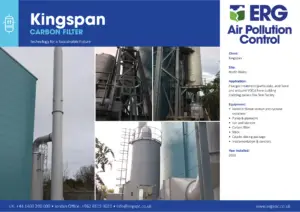
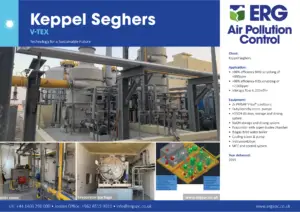
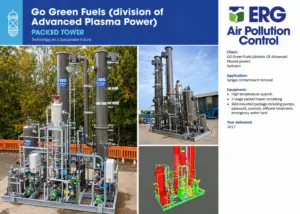
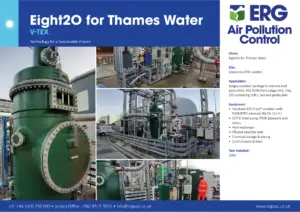
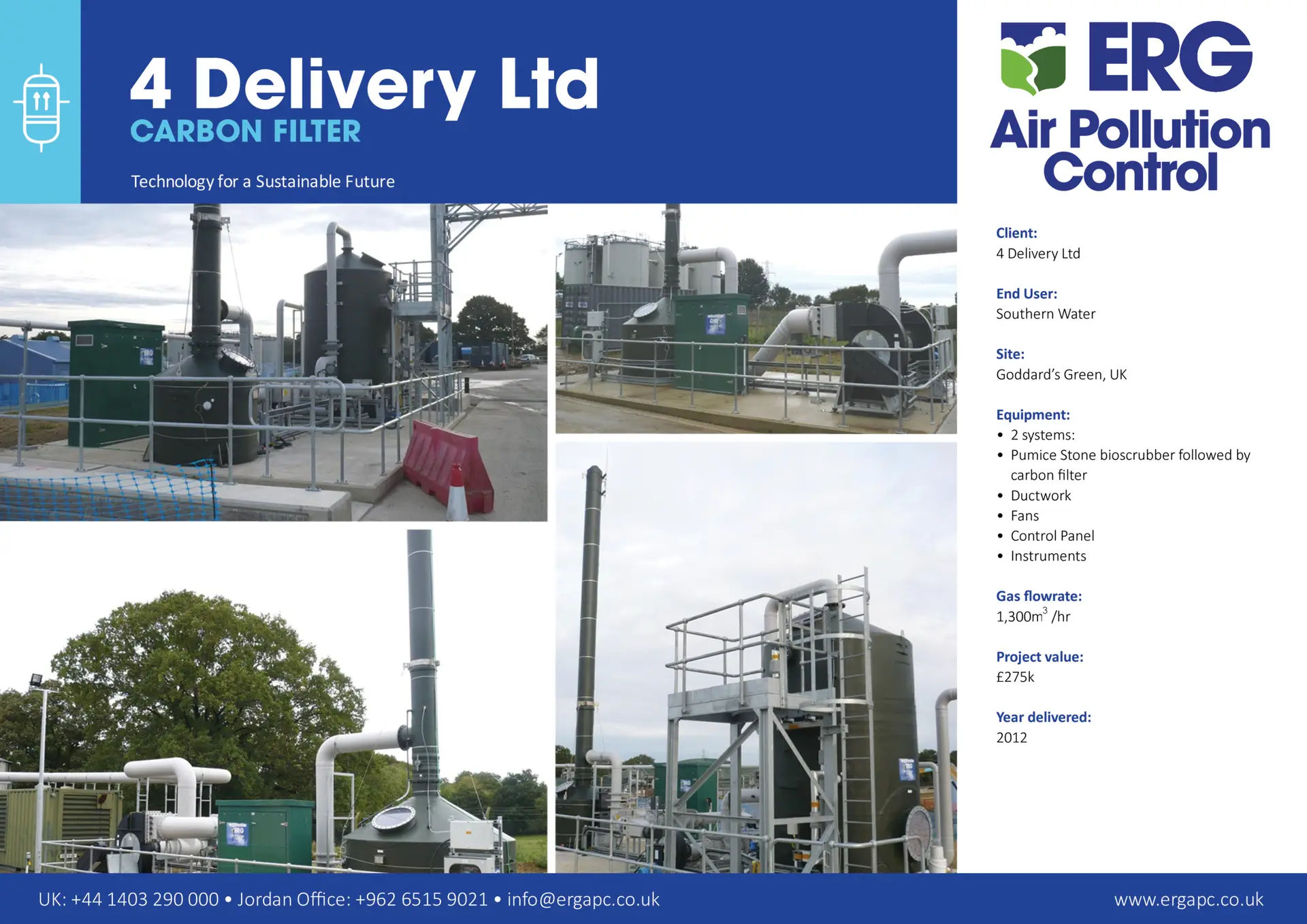
The original photographs show the external installation, including treatment vessels, ductwork, fan equipment, vertical discharge structures and access platforms.
These illustrate the engineering involved in integrating the treatment equipment and associated infrastructure at an operational wastewater site.
Project Specifications
| Parameter | Project detail |
|---|---|
| Client | 4 Delivery Ltd |
| End-user | Southern Water |
| Site | Goddard’s Green, UK |
| Industry | Wastewater treatment |
| Application | Odour control |
| Number of systems | 2 |
| Biological treatment | Pumice stone bioscrubber |
| Additional treatment | Activated carbon filter |
| Equipment | Ductwork, fans, control panel and instrumentation |
| Recorded gas flow rate | 1,300 m³/hr |
| Project value | £275,000 |
| Year delivered | 2012 |
Integrated Biological and Carbon Odour Control
Biological treatment and activated carbon filtration are established technologies for managing suitable odorous emissions from wastewater facilities.
Biological treatment can be used to degrade biodegradable contaminants, while activated carbon provides an adsorption-based treatment mechanism.
Combining these processes can provide additional treatment capability within an integrated odour control system.
The Goddard’s Green project demonstrates ERG’s experience in supplying biological and carbon filtration equipment alongside the supporting mechanical and electrical infrastructure.
ERG’s Experience in Wastewater Odour Control
ERG Air Pollution Control designs and supplies engineered odour control systems for sewage treatment works, pumping stations, sludge handling facilities and industrial applications.
Its technology portfolio includes biological filters, bio-trickling filters, activated carbon filtration and chemical scrubbing systems.
The 4 Delivery Ltd project provides a reference for ERG’s experience in supplying combined biological and carbon odour control systems for Southern Water.
Delivered in 2012, the £275,000 installation demonstrates ERG’s capability to integrate treatment equipment, fans, ductwork and controls within a wastewater odour management application.
For further information about biological odour control, activated carbon filtration or wastewater odour treatment systems, contact ERG Air Pollution Control.