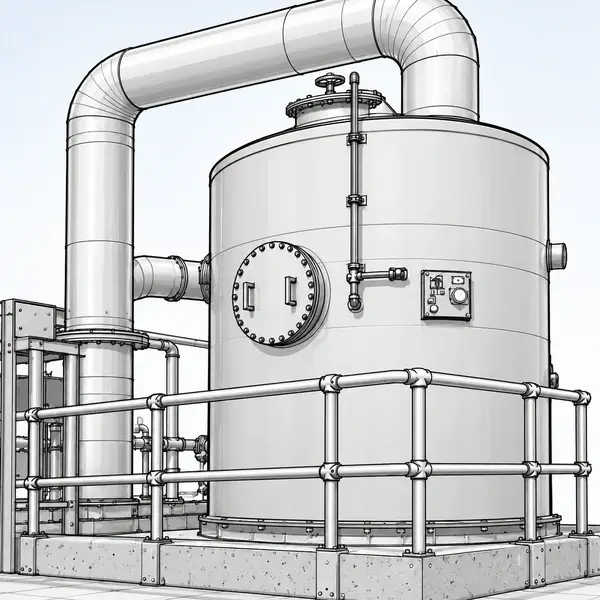
What Are Carbon Filters?
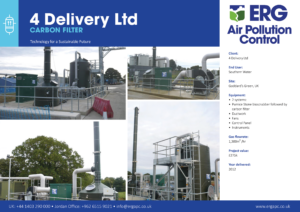
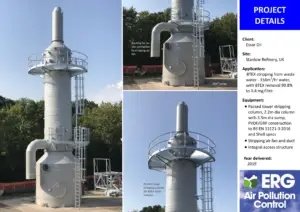
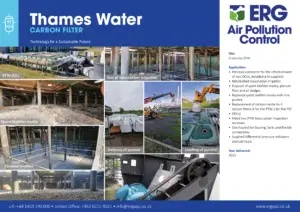
Carbon filters are an air pollution control device that use activated carbon to remove volatile organic compounds (VOCs), odours and toxic gases from an air stream through a process called adsorption. As contaminated air passes through a bed of activated carbon granules or pellets, pollutant molecules stick to the carbon’s surface, leaving clean air to be released safely to atmosphere.
Carbon filters are one of the most widely used technologies for industrial VOC abatement and odour control, valued for their simplicity, reliability and low running costs compared with more complex gas cleaning systems.
How Do Carbon Filters Work?
Activated carbon is an extremely porous material — a single gram can have an internal surface area of around 1,000 m², roughly the size of two tennis courts. This huge surface area, riddled with microscopic pores, gives the carbon enormous capacity to attract and hold gas molecules.
The process works in three simple steps:
1. Contaminated air enters the vessel. Foul or VOC-laden air is drawn through a sealed vessel containing a bed of activated carbon.
2. Pollutants stick to the carbon. As the gas flows through the bed, VOC and odour molecules bind to the internal surface of the carbon through adsorption, a physical (and sometimes chemical) bonding process.
3. Clean air is released. The treated air, now stripped of contaminants, exits the vessel and is safely discharged to atmosphere.
The carbon works on a batch basis. Once it becomes saturated, it is either replaced with a fresh charge or, in some systems, regenerated and reused.
What Do Carbon Filters Remove?
Carbon filters are effective against a broad range of gas-phase pollutants, including:
– Volatile organic compounds (VOCs) — such as toluene, MEK and ethyl acetate
– Hydrogen sulphide (H₂S) — a common cause of sewage and wastewater odour
– Ammonia (NH₃) and amines
– Mercaptans, aldehydes and acetone
– General nuisance odours from industrial and wastewater processes
Because they target gas-phase molecules rather than solid particles, carbon filters are typically used downstream of any dust or particulate removal stage, and are often the final “polishing” step in a wider air pollution control system.
Types of Carbon Filter System
Not every application needs the same configuration. Common carbon filter arrangements include:
– Single-bed filters — a straightforward, cost-effective option for lower-risk or lower-flow applications.
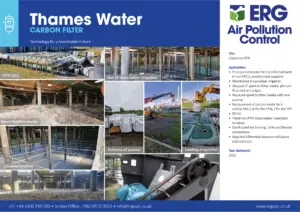
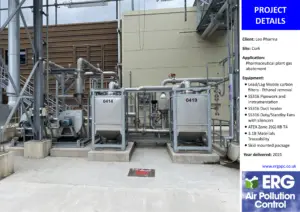
– Dual-bed / lead-lag filters — two vessels in series, so the lead vessel can be changed out once saturated while the lag vessel continues treating the gas, maximising carbon usage and minimising the risk of breakthrough.
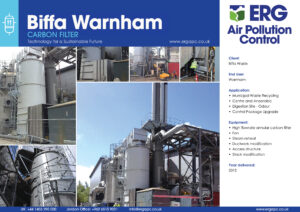
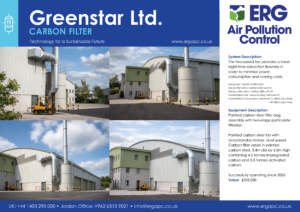
– Annular bed filters — designed for larger gas flows, offering a bigger cross-sectional area for lower pressure drop.
– Water-regenerable carbon filters — a specialist carbon media that can be regenerated in place by soaking and drying, extending carbon life and cutting replacement costs.
– Mobile or breathing filters — used for batch or intermittent releases, such as periodic solvent venting.
Where Are Carbon Filters Used?
Carbon filters are used across a wide range of industrial and municipal applications, including:
– Chemical and pharmaceutical processing — polishing residual VOCs from reactor, storage tank and process vent streams
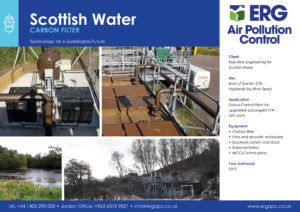
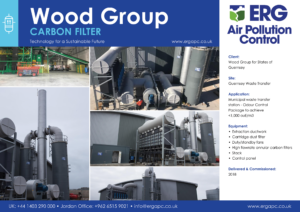
– Wastewater and municipal waste treatment — controlling hydrogen sulphide and odour at sites near residential areas
– Food, beverage and fragrance manufacturing — managing process odours
– Laboratories and fume extraction — treating low-concentration solvent vapours
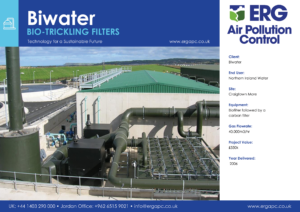
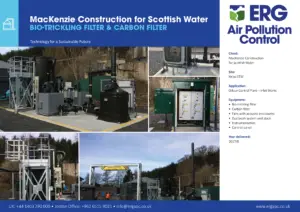
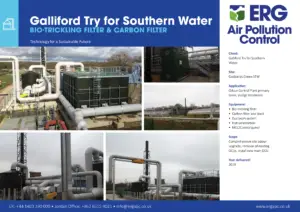
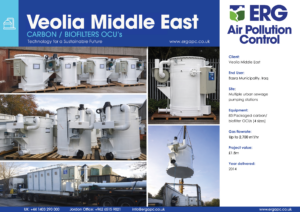
They are commonly installed as a stand-alone system, or as the final polishing stage after a chemical scrubber or bio-trickling filter, where they remove any residual VOCs or odour left in the treated air.
Carbon Filters vs. Other Air Pollution Control Technologies
Carbon filters aren’t always the right fit on their own. They’re generally best suited to low-to-moderate pollutant concentrations, and are often combined with other technologies for more demanding applications:
– Chemical scrubbers are typically used first to remove high concentrations of acid or basic gases, with a carbon filter polishing what’s left.
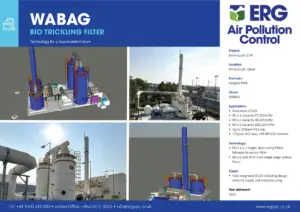
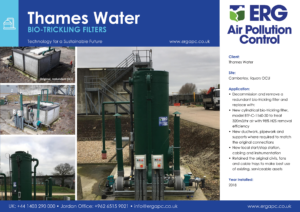
– Bio-trickling filters offer a lower-cost biological alternative for continuous, moderate-strength odour loads, sometimes paired with carbon for a final polish.
– Thermal oxidisers are better suited to high VOC concentrations, where the pollutant load is too great — or too valuable in fuel terms — for adsorption alone.
Benefits and Limitations
Benefits:
– Simple, well-understood technology with no chemical dosing required
– Low pressure drop and low energy consumption
– Compact footprint compared with wet scrubbing systems
– Can achieve very high removal efficiencies (over 99% for H₂S and VOCs in well-designed systems)
Limitations:
– Carbon becomes saturated and must be replaced or regenerated
– Less cost-effective at very high pollutant concentrations
– Performance depends on correct carbon selection for the target compounds
How do you choose an activated carbon filter supplier for odour control?
Choose an industrial activated carbon filter supplier that sizes the system for the actual gas flow, contaminants and required outlet performance. A wastewater odour filter treating hydrogen sulphide needs a different media selection and operating assessment from a filter treating solvent vapours. The lowest purchase price does not necessarily give the lowest lifetime cost.
- Define the duty: provide the airflow, pollutant concentrations, temperature, moisture conditions and operating hours, including expected peaks.
- Check the carbon selection: ask how the proposed media suits the target compounds and how expected service life has been estimated.
- Plan for breakthrough: agree how performance will be monitored, how spent media will be replaced and whether a lead-lag arrangement is needed.
- Compare whole-life costs: include fan electricity, replacement media, servicing and spent-carbon handling alongside the installation cost.
- Ask for relevant evidence: request comparable project experience and a performance commitment tied to the stated inlet conditions.
ERG designs activated carbon filtration as a standalone treatment or a polishing stage after biological or chemical treatment. See ERG’s carbon filter systems and odour control solutions, or discuss the gas treatment duty with ERG.
Guide updated 26 October 2026: added practical guidance on treatment selection and supplier assessment.
Frequently Asked Questions
What are carbon filters used for?
Carbon filters are used to remove VOCs, odours and toxic gases such as hydrogen sulphide from industrial and wastewater air streams before the air is released to atmosphere.
How long does activated carbon last in a filter?
This varies significantly with the pollutant load and carbon type, ranging from a few months to several years. Water-regenerable carbon can be reused for multiple cycles, extending service life to several years.
Can carbon filters be regenerated?
Some specialist carbon media, such as water-regenerable carbon, can be regenerated on site through a soak-and-dry process. Standard activated carbon is usually replaced once spent.
Are carbon filters better than chemical scrubbers?
Neither is universally “better” — they suit different jobs. Carbon filters excel at lower concentrations and odour polishing, while chemical scrubbers handle higher concentrations of acid or basic gases more cost-effectively. Many systems combine both.
Explore ERG’s Carbon Filtration Technology
ERG designs and manufactures activated carbon filters — from stand-alone units to fully integrated, multi-stage air pollution control packages — for chemical, pharmaceutical, wastewater and municipal waste applications.
– See how ERG applies carbon adsorption for VOC abatement in detail: Carbon Adsorption of VOCs
– Explore odour control systems using carbon polishing: Odour Control Systems
– See carbon filtration in a chemical processing context: Chemical
– See carbon filtration for wastewater and municipal sites: Municipal Waste
Talk to our team about how a carbon filter could solve your site’s VOC or odour emissions challenge.