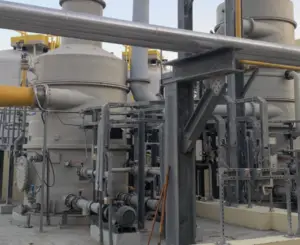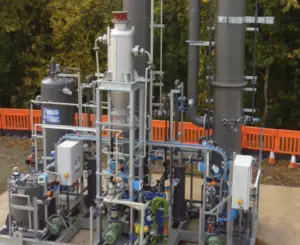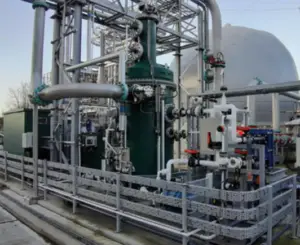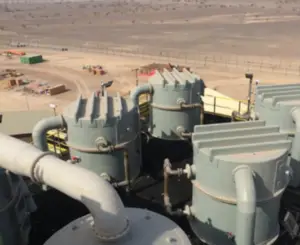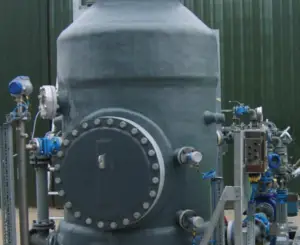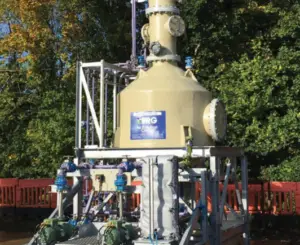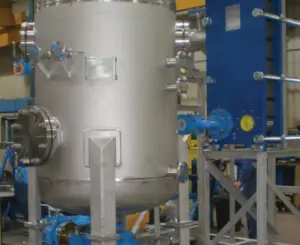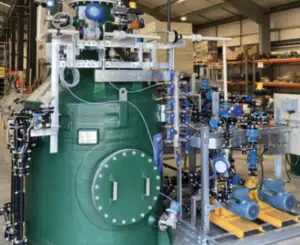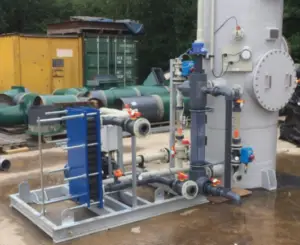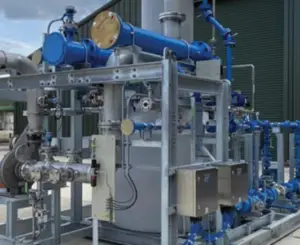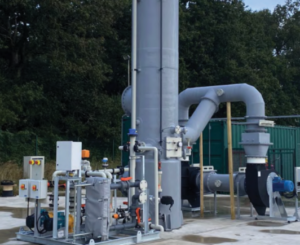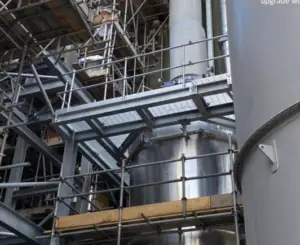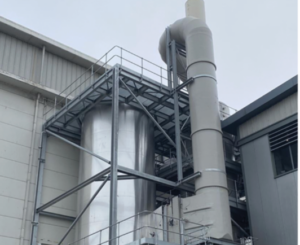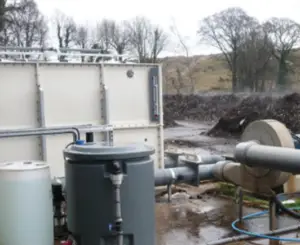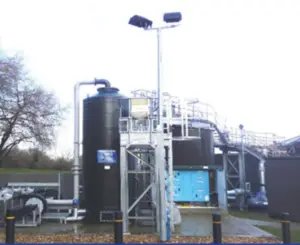
What Is a Packed Tower?
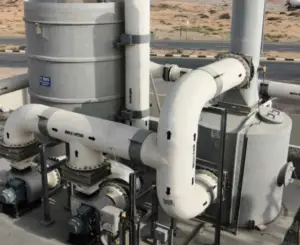
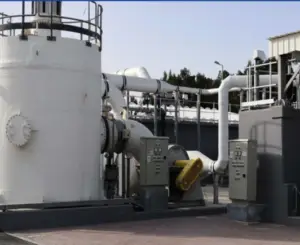
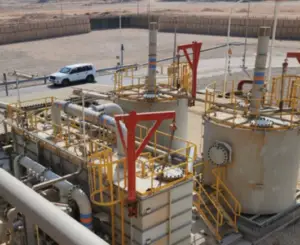
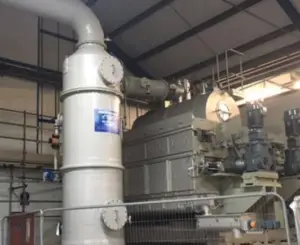
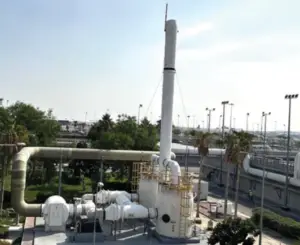
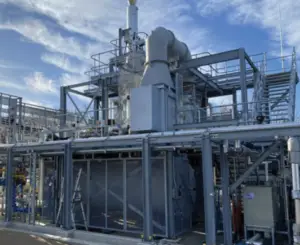
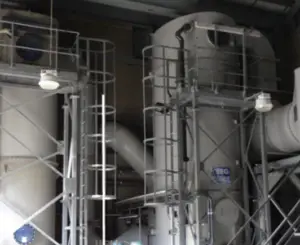
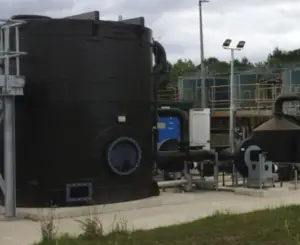
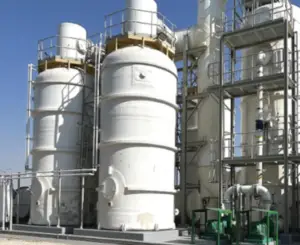
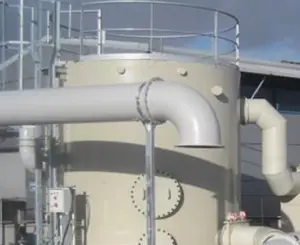
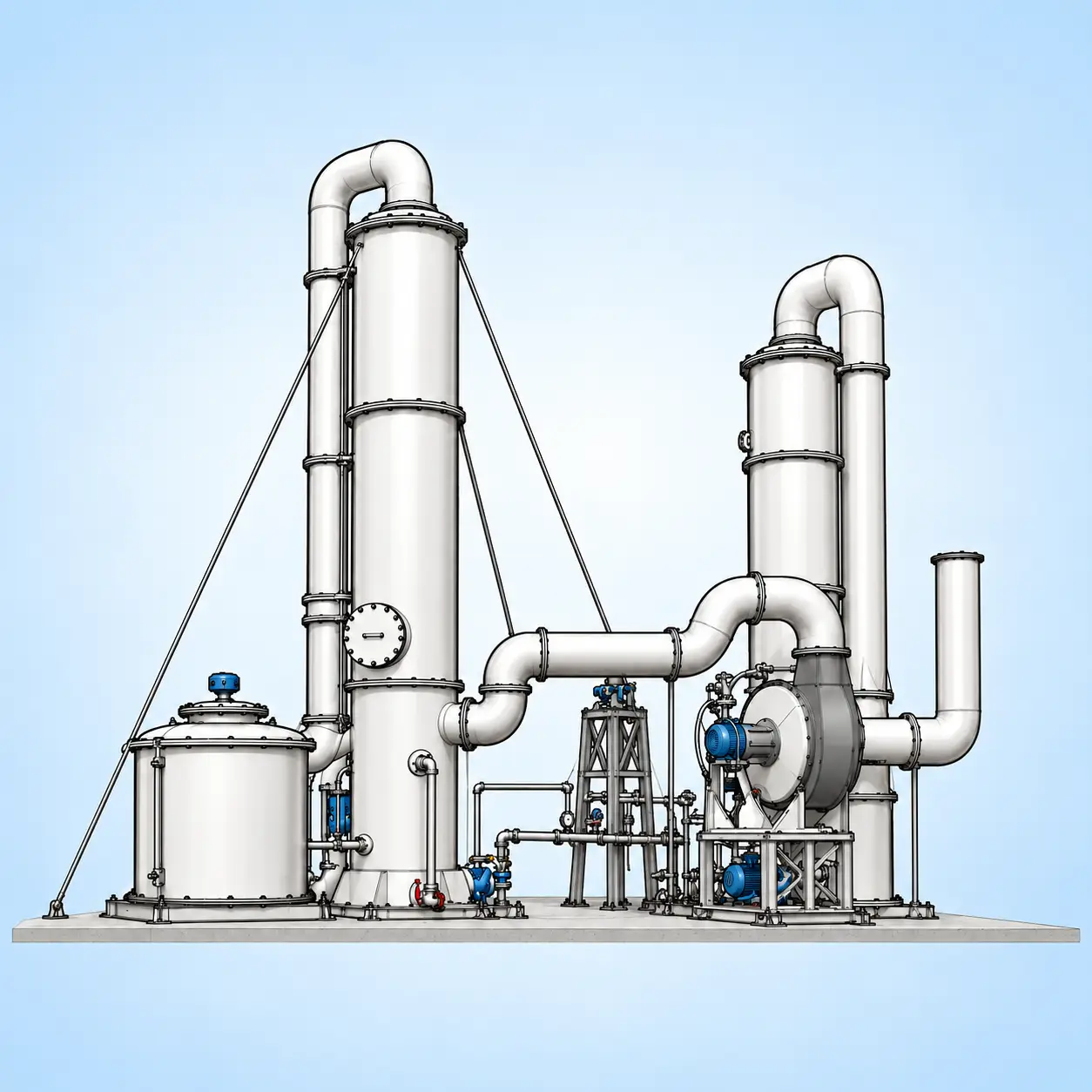
A packed tower is a piece of industrial gas treatment equipment that uses a bed of packing material to create intense contact between a gas stream and a liquid, most often to absorb soluble pollutants out of the gas. Contaminated gas flows up through the vessel while liquid trickles down over the packing, and the huge surface area created by the packing bed lets the two mix far more efficiently than they would in an open, empty vessel.
Because that same gas-liquid contact can be used for more than one job, packed towers are one of the most versatile pieces of equipment in industrial air pollution control — not just a scrubber, but also a stripper and a gas cooler, depending on how the system is set up.
Three Jobs, One Vessel: What Packed Towers Actually Do
It’s easy to think of a packed tower as simply “the equipment inside a chemical scrubber,” but it’s worth understanding it as a piece of mass-and-heat-transfer equipment in its own right, capable of three distinct duties:
– Gas scrubbing (absorption) — removing soluble gas-phase pollutants, such as acid gases, ammonia or VOCs, from a contaminated air stream by absorbing them into a liquid.
– Liquid stripping — the reverse process, removing dissolved contaminants out of a liquid stream by contacting it with a stripping gas.
– Direct-contact gas cooling — cooling a hot, saturated gas stream by bringing it into direct contact with cooler liquid, often as a pre-treatment step before another gas cleaning stage.
This versatility is why packed towers turn up across so many different parts of an industrial air pollution control system, not only as the “chemical scrubber” people typically picture.
How Does a Packed Tower Work?
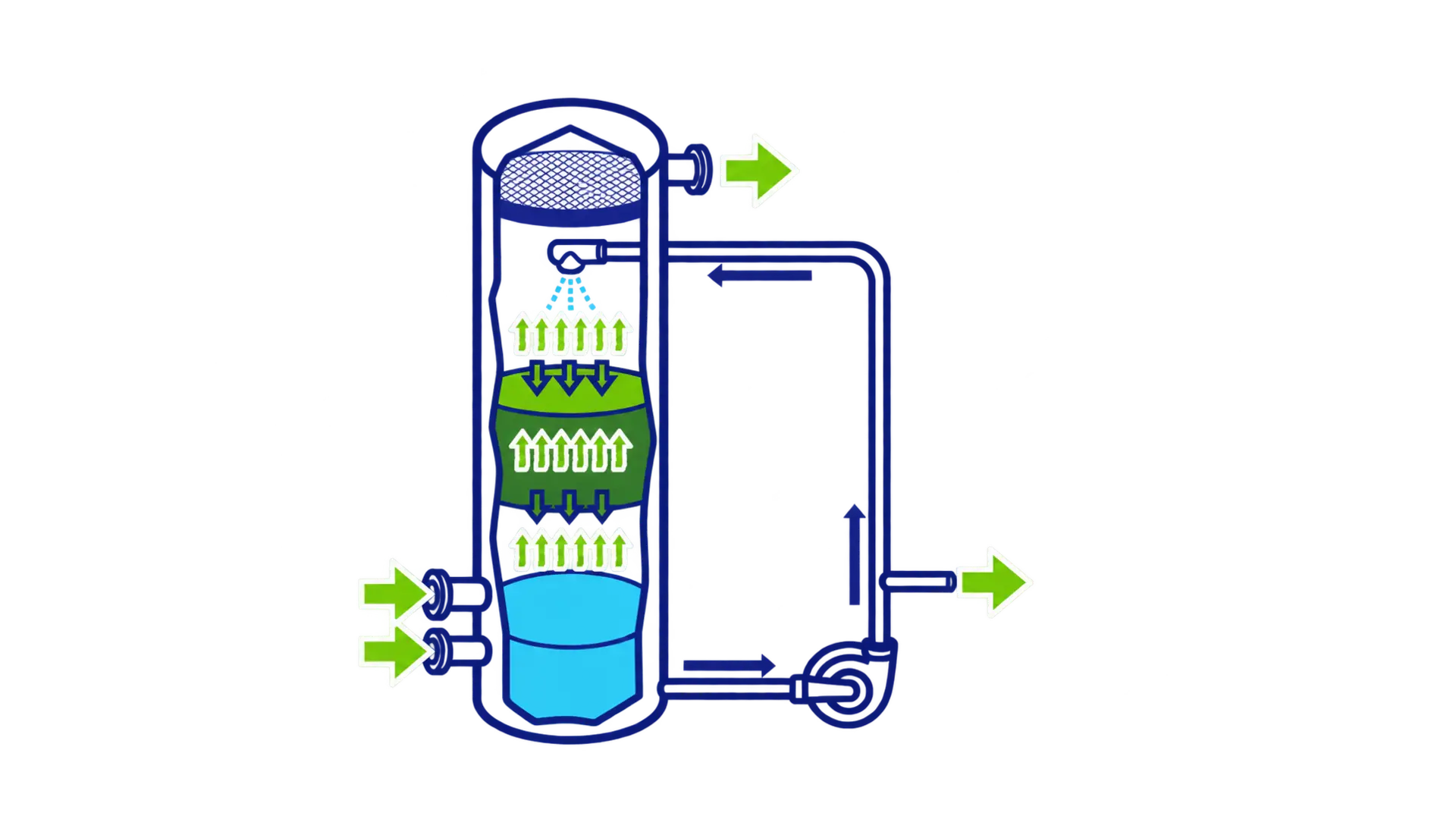
1. Gas enters the base, liquid enters the top. Contaminated gas flows upward through the vessel while liquid is distributed evenly across the top of the packing bed via sprays or distributors.
2. The packing creates contact. As the gas rises and the liquid falls, both pass through a bed of packing material engineered to maximise the surface area where gas and liquid meet.
3. Mass or heat transfer takes place. Depending on the duty, soluble contaminants transfer from gas to liquid (absorption), from liquid to gas (stripping), or heat transfers between the two (cooling).
4. Gas and liquid separate and exit. Treated gas passes through a mist elimination stage before leaving the top of the vessel, while the liquid collects in a sump for recirculation, treatment, or disposal.
Where Are Packed Towers Used?
Packed towers appear across a wide range of industrial applications, including:
– Chemical and pharmaceutical manufacturing — scrubbing acid or basic gas vents from reactors and storage tanks
– Wastewater and odour control — removing H₂S and other odour compounds
– Flue gas treatment — cooling hot, saturated gas before it reaches downstream equipment
– Solvent recovery — stripping VOCs from process liquids for reuse or disposal
They’re frequently one stage within a larger system — for example, cooling a hot gas stream before it reaches a carbon filter, or absorbing acid gas downstream of a venturi scrubber that’s already removed particulate.
Packed Towers vs. Other Tower Configurations
Packed towers aren’t the only way to achieve gas-liquid contact for chemical scrubbing — they sit alongside tray towers, spray towers and v-tex scrubbers as different equipment options for the same underlying goal:
– Packed towers generally offer the highest mass-transfer efficiency per unit of height, making them a compact, high-performance choice for clean, low-particulate gas streams.
– Tray towers handle streams with some particulate present better than packing, at the cost of some efficiency and height.
– Spray towers trade some efficiency for very low pressure drop and strong fouling resistance.
– Venturi scrubbers are the better choice when the primary need is fine particulate capture rather than gas absorption.
Benefits and Limitations
Benefits:
– Very high mass-transfer efficiency (typically 99.5%, up to 99.999%) in a relatively compact footprint
– Flexible across a huge range of flowrates, from around 100 to 100,000 m³/hr per tower
– Multi-purpose — the same core design principle supports scrubbing, stripping and gas cooling duties
– Wide choice of packing types and materials to match the specific gas chemistry and fouling risk
Limitations:
– Packing can foul or block if the gas stream carries significant particulate, sticky solids, or scaling contaminants
– Taller vessels may be needed to achieve the highest removal efficiencies, compared with some alternative configurations
– Requires ongoing liquor management (chemical dosing, blowdown, or make-up water) depending on the duty
Frequently Asked Questions
What is a packed tower used for?
A packed tower is used to bring a gas stream into intimate contact with a liquid — most commonly to absorb soluble pollutants such as acid gases, ammonia or VOCs out of the gas, but also to strip contaminants from liquids or to cool hot gas streams.
Is a packed tower the same as a chemical scrubber?
Not exactly. “Chemical scrubber” describes the broader technology of using a reactive liquid to neutralise pollutants; a packed tower is one specific type of equipment commonly used to carry out that scrubbing, alongside alternatives such as tray towers, spray towers and v-tex scrubbers.
Can a packed tower do more than remove pollutants from gas?
Yes. The same packing-and-liquid-contact principle used for gas scrubbing can also strip dissolved contaminants out of a liquid stream, or cool a hot, saturated gas stream through direct contact with liquid — making packed towers a genuinely multi-purpose piece of process equipment.
Explore ERG’s Packed Tower Technology
For the detailed engineering specification — flowrate ranges, packing types, materials of construction, and design codes — see ERG’s dedicated technical page, which remains the authoritative source on this technology:
– Packed Towers — full technical range, design parameters and typical scrubbing/stripping solutions – Chemical Scrubbers Guide — the broader chemical scrubbing process this equipment is often used for – Venturi Scrubbers Guide — the complementary particulate-removal technology often paired upstream – Carbon Filters Guide — a common downstream stage when packed towers are integrated into a wider air pollution control system
Talk to our team about a packed tower solution for your site’s gas scrubbing, stripping or cooling needs.