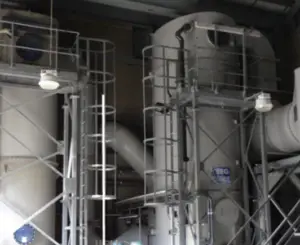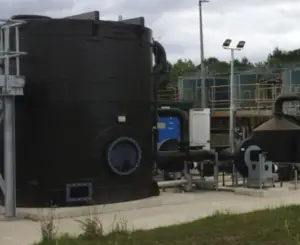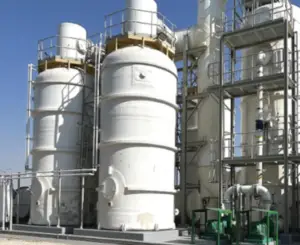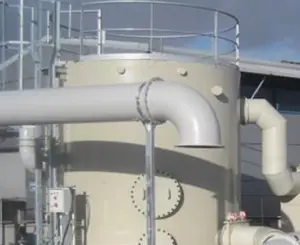
What Are Quench Vessels?
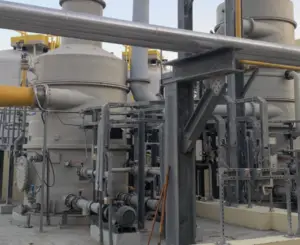
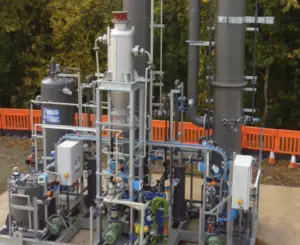
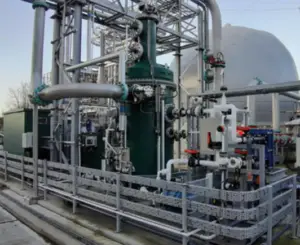
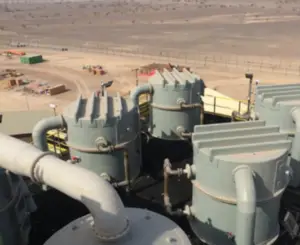
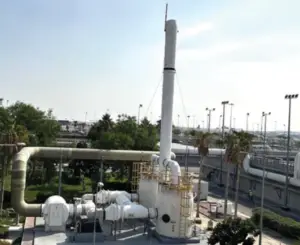
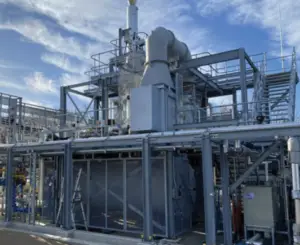
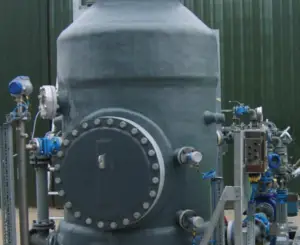
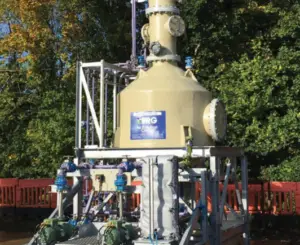
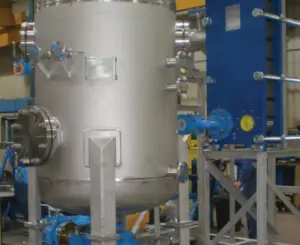
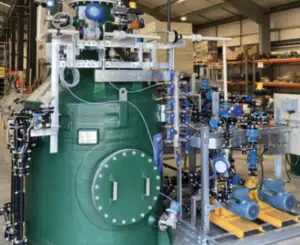
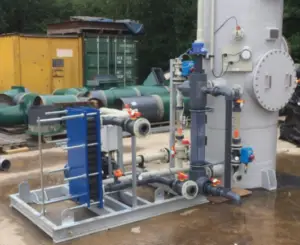
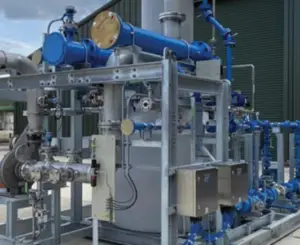
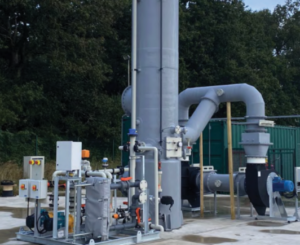
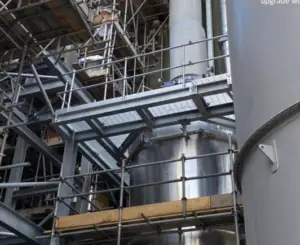
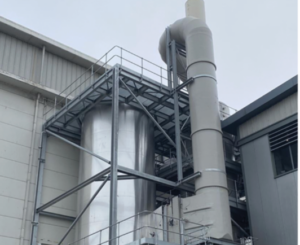
A quench vessel is a piece of equipment that rapidly cools very hot gas — such as flue gas, process gas or syngas — by spraying it directly with a liquid, so it can safely enter the next stage of a gas cleaning system. Rather than using a heat exchanger, a quench vessel relies on a process called adiabatic saturation: some of the sprayed liquid evaporates, and the energy needed for that evaporation is pulled straight out of the hot gas, dropping its temperature almost instantly.
Because so much industrial gas cleaning equipment simply can’t tolerate extreme temperatures, a quench vessel is often the very first stage in a wet gas cleaning system — the piece of kit that makes everything downstream possible.
How Does a Quench Vessel Work?
Hot gas enters the vessel. Gas typically enters at the top and flows downward through the chamber.
1. The gas is immediately sprayed with liquid. Quench liquor is sprayed directly into the hot gas stream as it enters.
2. Evaporation pulls heat out of the gas. A portion of the sprayed liquid evaporates, drawing the energy for that evaporation from the hot gas itself — cooling it rapidly.
3. The gas reaches its quench temperature. Cooling continues until the gas reaches its adiabatic saturation temperature, a point determined by the inlet gas’s temperature, humidity, pressure and composition.
4. Liquid drains and recirculates. Unevaporated liquor falls to a sump tank and is pumped back to the top of the vessel, while the now-cooled gas moves on to the next treatment stage.
What Gas Streams Do Quench Vessels Handle?
Quench vessels are engineered to handle genuinely extreme inlet temperatures, including:
– Oxidiser flue gases — 850°C to 1,150°C, often containing sulphurous and/or halogenated contaminants and particulates
– Process gases — up to 500°C, also containing sulphurous and/or halogenated contaminants and particulates
– Syngas — up to 250°C, containing VOCs, ammonia, halogenated and sulphurous contaminants and tars
Why Quench Vessels Matter in a Gas Cleaning System
Most downstream gas cleaning equipment — scrubbers, filters, fans — is built from materials and components that simply cannot survive direct contact with gas at hundreds of degrees. A quench vessel solves this by acting as a protective first stage, bringing the gas down to a manageable temperature before it reaches anything more sensitive. This also has a safety dimension: quench systems typically include an automatic emergency water supply that activates if the main liquid circuit fails, protecting downstream equipment from heat damage.
Types of Quenching
– Full (adiabatic saturation) quenching — cools the gas all the way to its adiabatic saturation temperature, the standard configuration for most high-temperature applications
– Partial quenching — uses air or water to reduce gas temperature without achieving full adiabatic saturation, used where process conditions or downstream equipment only require partial cooling
Where Are Quench Vessels Used?
– Thermal oxidiser flue gas treatment — cooling combustion gases before they reach wet scrubbing stages
– High-temperature process gas cleaning — protecting downstream equipment in chemical and industrial processes
– Syngas and gasification systems — conditioning syngas before further treatment or use
– As the first stage ahead of venturi scrubbers, tray towers, packed towers or V-tex® scrubbers in an integrated wet gas cleaning package.
Quench Vessels vs. Other Gas Conditioning Equipment
A quench vessel is specifically about rapid, direct-contact cooling of very hot gas — it’s a distinct step from the scrubbing or filtration stages that typically follow it. It shouldn’t be confused with the equipment used purely for gas-liquid contact scrubbing (packed towers, tray towers, venturi scrubbers), even though those technologies are often paired directly downstream of a quench. It’s also a different job from further cooling once the gas is already near its saturation point — a separate stage of equipment picks up from there if colder gas temperatures or additional moisture removal are required.
Benefits and Limitations
Benefits:
– Handles extremely high inlet gas temperatures (up to 1,150°C) reliably
– Protects downstream equipment from heat damage, extending its service life
– Built-in emergency water supply provides an automatic safety fail-safe
– Flexible design (full or partial quenching) matched to the specific process need
Limitations:
– Requires careful control of liquid temperature to avoid downstream issues, such as sub-micron aerosol mist formation
– Materials of construction must be carefully matched to contaminants and temperature, often requiring high-grade alloys or lined vessels
– On its own, a quench vessel cools gas but doesn’t remove pollutants — it’s typically paired with scrubbing equipment to complete the treatment.
Frequently Asked Questions
What is a quench vessel used for?
A quench vessel is used to rapidly cool very hot gas streams — such as flue gas, process gas or syngas — to a safe, manageable temperature before the gas enters further treatment stages such as scrubbing or filtration.
How does a quench vessel cool gas without a heat exchanger?
It uses adiabatic saturation: liquid sprayed into the hot gas evaporates, and the energy required for that evaporation is drawn directly from the gas, cooling it almost instantly without any heat exchange surface.
What materials are quench vessels made from?
Quench vessel materials are matched to the specific contaminants and operating temperature involved, and commonly include 316 stainless steel, duplex stainless steel, Hastelloy C-276, graphite or brick-lined carbon steel for the most demanding, highest-temperature applications.
Do quench vessels have any built-in safety features?
Yes. Quench vessel designs typically include an automatic emergency water supply that activates if there’s a problem with the main quench liquid circuit, protecting downstream equipment from potential heat damage.
Explore ERG’s Quench Vessel Technology
For full engineering detail — materials of construction, process safety design and system integration — see ERG’s dedicated technical page, which remains the authoritative source on this technology:
– Quench Vessels — operating principle, design features and typical gas temperature ranges – Venturi Scrubbers Guide — a common downstream stage after quenching – Tray Towers Guide — another common downstream scrubbing stage – Packed Towers Guide — the higher-efficiency downstream option for soluble gas removal
Talk to our team about a quench vessel solution for high-temperature gas cooling at your site.