What Are Spray Towers?
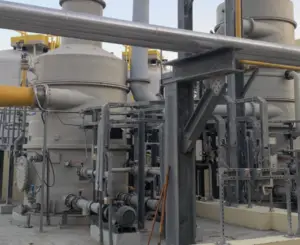
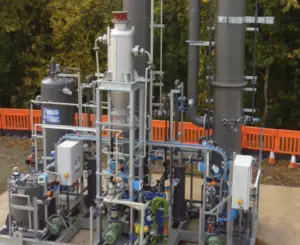
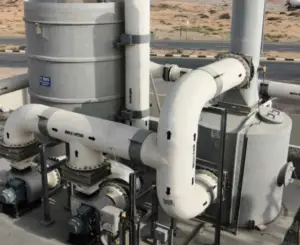
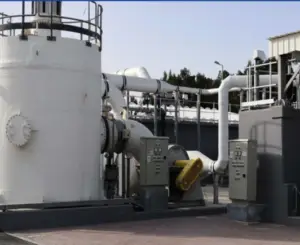
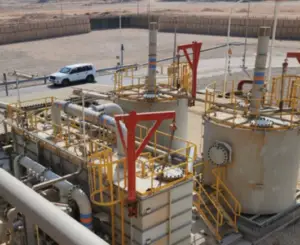
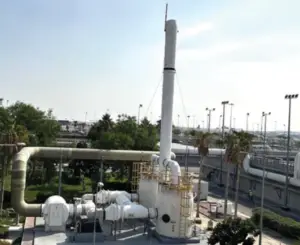
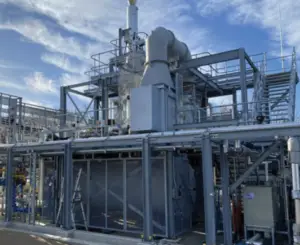
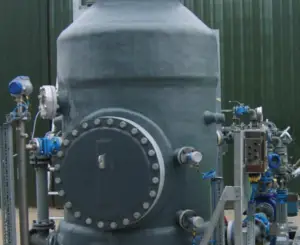
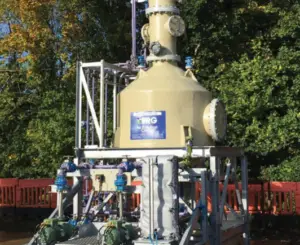
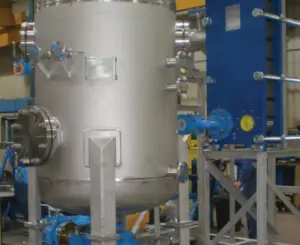
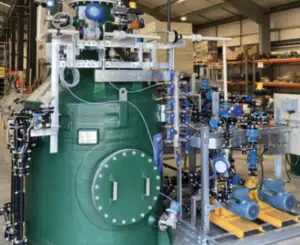
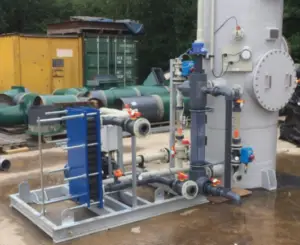
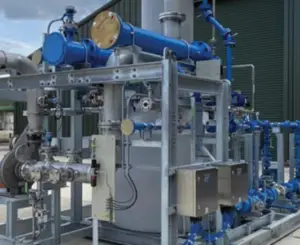
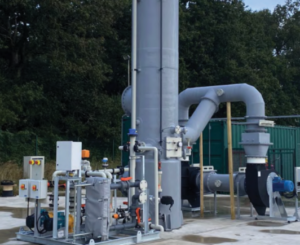
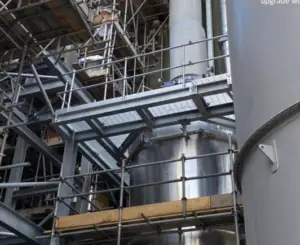
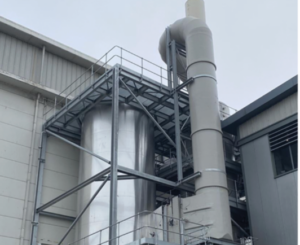
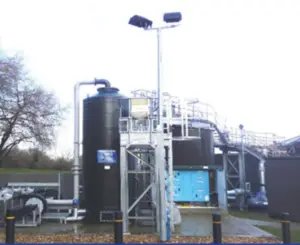
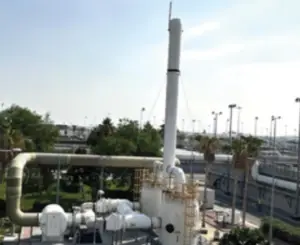
A spray tower is the simplest form of wet scrubber: an open chamber where contaminated gas passes through a fine spray of liquid droplets, washing out coarse particulate and highly soluble gas contaminants as it flows through. Unlike packed or tray towers, a spray tower has no internal packing or trays for the gas and liquid to pass through — just open space and spray nozzles — which is exactly what makes it useful in situations where other scrubber types would struggle.
That simplicity is the whole point. Spray towers are a deliberate trade-off: lower removal efficiency and lower cost, in exchange for a design that’s much harder to block or foul.
How Does a Spray Tower Work?
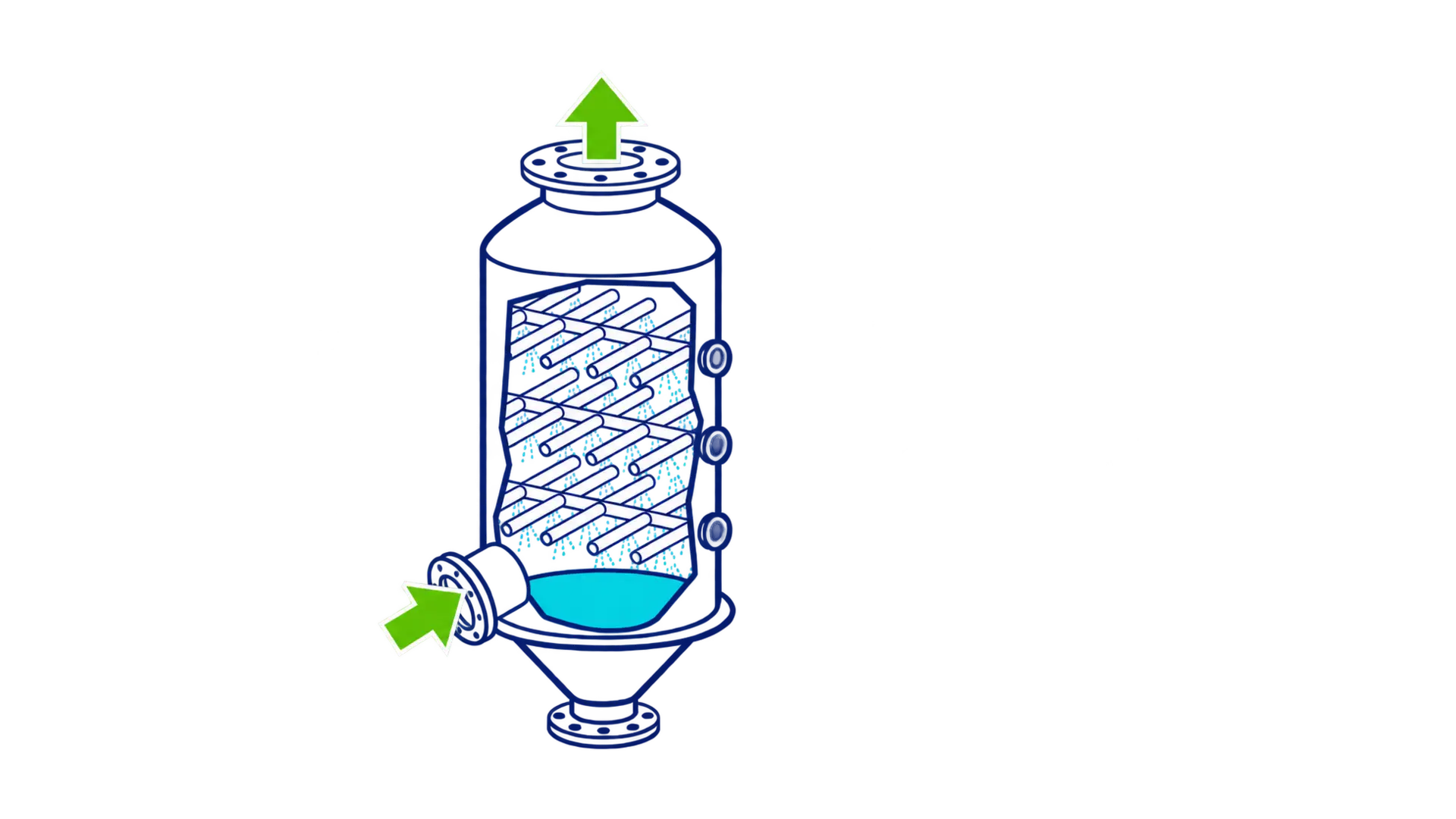
1. Gas enters the open chamber. Contaminated gas flows into a vessel that, unlike a packed or tray tower, contains no internal media — just open space.
2. Liquid is sprayed into the gas path. Nozzles distribute a fine spray of scrubbing liquor across the chamber, creating a curtain of droplets for the gas to pass through.
3. Gas contacts the droplets. As gas flows through the spray, coarse particulate and highly soluble contaminants transfer into the liquid droplets.
4. Liquid and gas separate. Droplets fall to a sump for collection or recirculation, while the cleaned gas continues out of the vessel.
Because there’s no packing bed or tray stack to clog, this open-chamber design keeps working even when the incoming gas carries solids that would quickly foul a more efficient scrubber configuration.
What Does a Spray Tower Remove?
– Coarse particulate — larger particles that don’t require the fine-scale contact of a venturi scrubber
– Highly soluble gaseous contaminants — gases that absorb readily into liquid without needing the extra surface area packing or trays provide
– Contaminants prone to forming difficult solids — particularly effective where inlet contaminants hydrolyse into sticky or scaling deposits that would block other equipment
When Is a Spray Tower the Right Choice?
Spray towers earn their place specifically because they’re less efficient than packed or tray towers — the trade-off is worthwhile when:
– The gas stream is prone to fouling — no internal packing means nothing to block, even with sticky or solids-forming contaminants
– Budget or technical constraints rule out higher-efficiency options — a simpler, lower-cost first stage may be all that’s needed
– A rough first pass is sufficient — spray towers are often used as a pre-treatment stage ahead of a more efficient scrubber, reducing the load that reaches downstream equipment.
Where Are Spray Towers Used?
– Pre-treatment ahead of higher-efficiency scrubbers — knocking down coarse particulate before a venturi, tray or packed tower stage
– Processes generating hydrolysing or scaling contaminants — where fouling resistance matters more than peak efficiency
– Budget-constrained gas cleaning applications — where a simple, low-capital-cost solution meets the requirement
Spray towers are frequently combined with other ERG mass and heat transfer equipment — venturi scrubbers, tray towers, packed towers or V-tex® scrubbers — as one stage within a larger integrated system.
Spray Towers vs. Other Scrubber Configurations
– Packed towers achieve much higher mass-transfer efficiency thanks to their packing, but that same packing is vulnerable to fouling — spray towers are the fallback when the gas stream can’t tolerate packing.
– Tray towers offer a middle ground: multi-stage efficiency gains without the fine-scale fouling risk of packing, but still more prone to blockage than an open spray chamber.
– Venturi scrubbers outperform spray towers on fine particulate capture, but at higher pressure drop and running cost — spray towers are the lower-cost option when only coarse particulate needs removing.
Benefits and Limitations
Benefits:
– Simple, open-chamber design with no packing or trays to block
– Low capital cost relative to other scrubber types
– Excellent resistance to fouling, scaling and solids deposition
– Effective at handling contaminants that hydrolyse into difficult solids
Limitations:
– Lower removal efficiency than packed or tray towers
– Not suited to fine particulate or applications requiring high-efficiency gas absorption
– Often needs to be paired with a downstream stage to meet stricter discharge requirements.
Frequently Asked Questions
What is a spray tower used for?
A spray tower is used for low-efficiency, low-cost scrubbing of coarse particulate and highly soluble gaseous contaminants, particularly where the gas stream is prone to fouling other scrubber designs.
Why would you choose a spray tower over a more efficient scrubber?
Spray towers are chosen when fouling resistance, low cost, or a genuinely simple design matter more than achieving the highest possible removal efficiency — for example, where inlet contaminants form solids that would quickly block a packed or tray tower.
Can a spray tower be combined with other scrubber technologies?
Yes. Spray towers are often used as a pre-treatment stage ahead of a more efficient scrubber, such as a venturi, tray tower or packed tower, reducing the particulate or contaminant load reaching the downstream stage.
Explore ERG’s Spray Tower Technology
For full technical detail on ERG’s spray tower range, see the dedicated technical page, which remains the authoritative source on this technology:
– Spray Towers — operating principle and application guidance – Tray Towers Guide — the multi-stage alternative for higher removal efficiency – Packed Towers Guide — the higher-efficiency alternative for cleaner, low-fouling gas streams – Venturi Scrubbers Guide — the complementary technology for fine particulate capture
Talk to our team about a spray tower solution for fouling-resistant, low-cost gas scrubbing at your site.