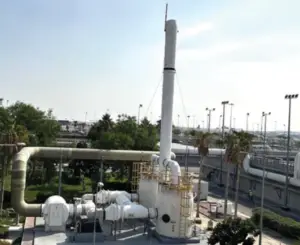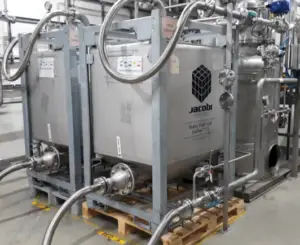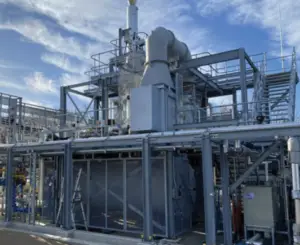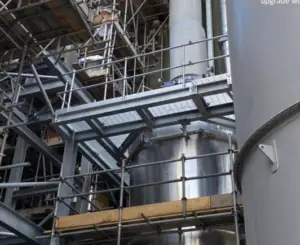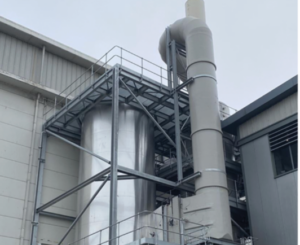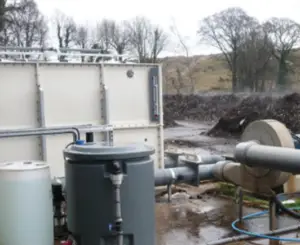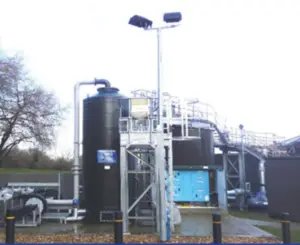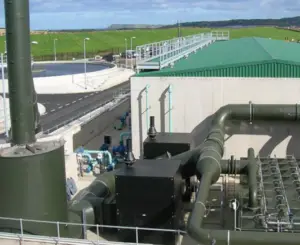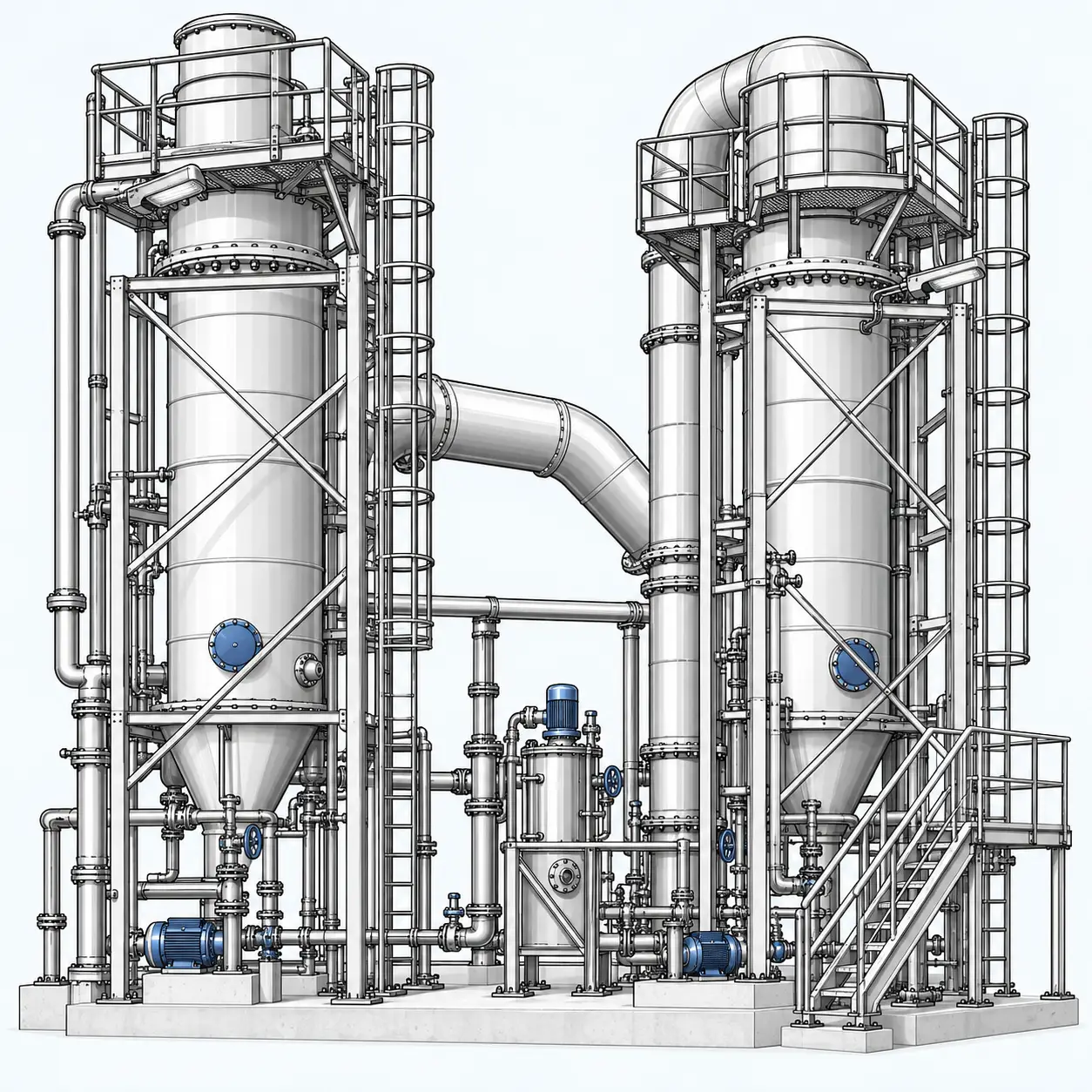
What Are Chemical Scrubbers?
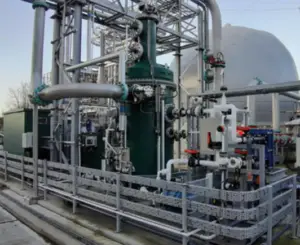
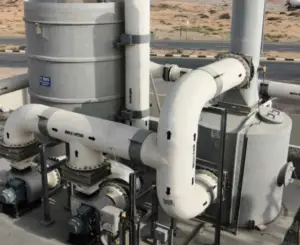
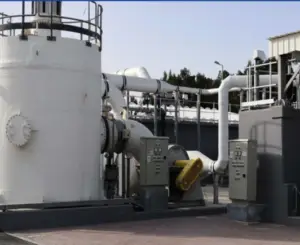
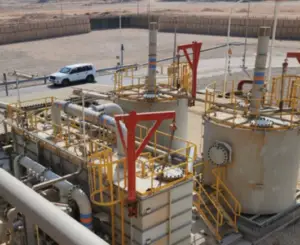
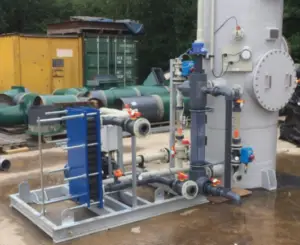
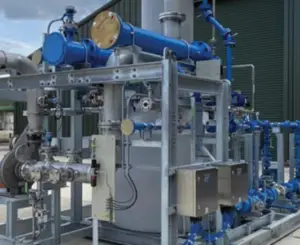
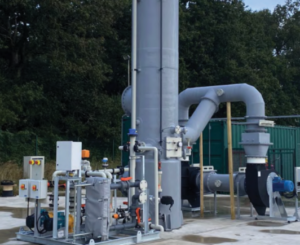
Chemical scrubbers are an air pollution control system that removes acid gases, basic gases, odour and some VOCs by bringing contaminated air into contact with a reactive liquid, which absorbs and chemically neutralises the pollutants before the cleaned air is released to atmosphere. Unlike a purely physical process, the scrubbing liquid is dosed with a reagent — typically an acid, alkali or oxidising agent — that reacts with the target gas and converts it into a non-volatile soluble and stable compound.
Chemical scrubbers are one of the most established and versatile technologies in industrial air pollution control, capable of achieving very high removal efficiencies (typically 99.5% or higher) across a wide range of flowrates and contaminant loads.
How Do Chemical Scrubbers Work?
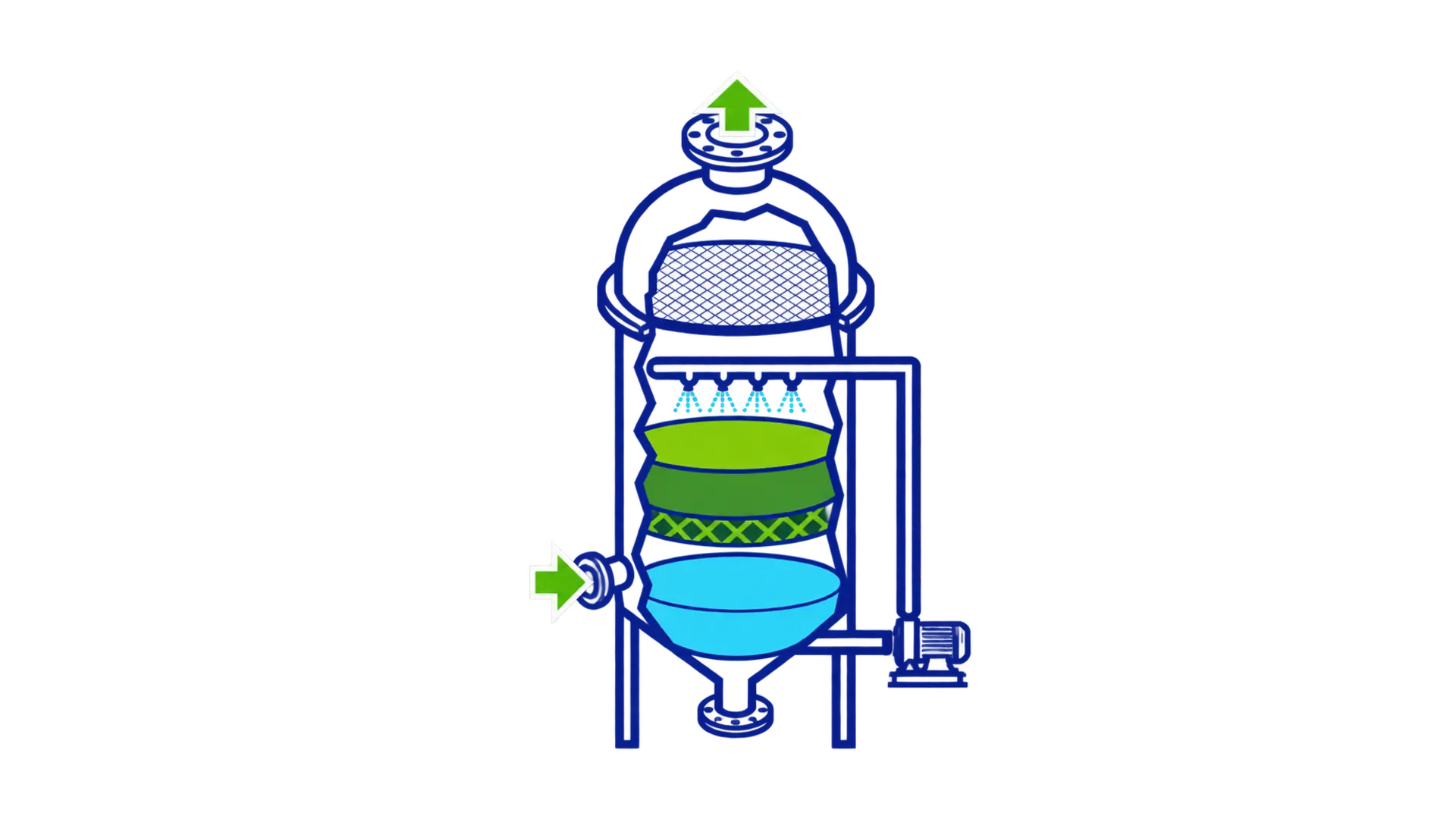
At its core, chemical scrubbers rely on gas absorption combined with a chemical reaction:
1. Contaminated air enters the scrubber. Foul or process gas is drawn into a vessel, most often flowing upward against a downward flow of scrubbing liquid (a “counter-current” arrangement).
2. Gas contacts the scrubbing liquid. The gas and liquid are brought into close contact — commonly across a bed of packing material, over trays, or through fine liquid droplets — creating a large surface area for mass transfer.
3. Pollutants are absorbed and neutralised. Soluble contaminants dissolve into the liquid film and react with the dosed reagent, converting them into a stable, non-volatile salt or other compound.
4. Clean air is released; spent liquor is managed. The treated gas passes through a mist eliminator to remove any liquid carry-over before discharge, while the scrubbing
liquor is recirculated, periodically dosed with fresh reagent, and bled off for treatment or disposal as it becomes spent.
Because the reaction — not just solubility — drives pollutant removal, chemical scrubbers can achieve high efficiencies even for gases that aren’t especially soluble in plain water.
What Do Chemical Scrubbers Remove?
Chemical scrubbers are typically selected for:
– Acid gases — such as HCl, Cl₂, SO₂, HF and H₂S, usually neutralised with an alkaline reagent (e.g. sodium hydroxide)
– Basic gases — such as ammonia (NH₃) and amines, typically treated with an acidic reagent
– Odour compounds — including hydrogen sulphide and mercaptans, often using an oxidising reagent
– Selected soluble VOCs — where the compound is sufficiently water-soluble or reactive
They are less suited to insoluble or non-reactive VOCs, high dust loadings, or very high pollutant concentrations, where other technologies (such as carbon filters, thermal oxidisers or dedicated particulate control) may be more appropriate – either instead of, or alongside, a chemical scrubber.
Types of Chemical Scrubber Configuration
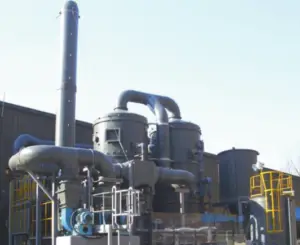
“Chemical scrubber” describes the underlying technology — a reactive liquid neutralising pollutants — rather than a single piece of equipment. In practice, that reaction takes place inside one of several tower configurations, each suited to different duties:
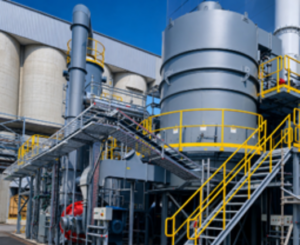
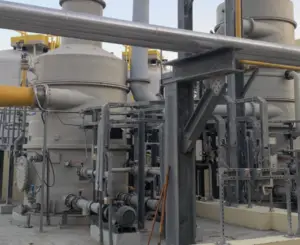
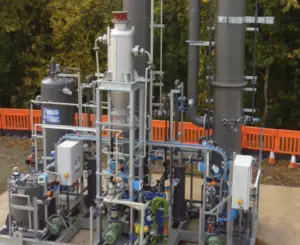
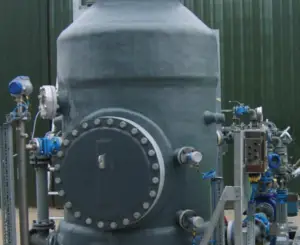
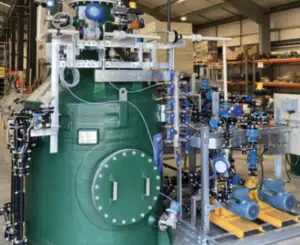
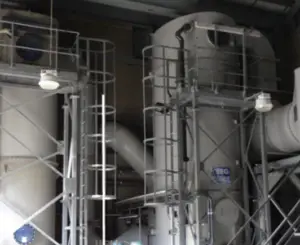
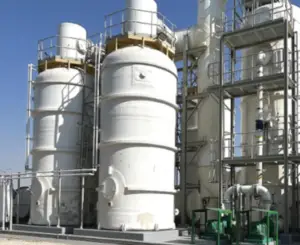
– Packed towers — the most common configuration, using a bed of packing material (such as Pall rings or structured packing) to maximise gas-liquid contact area for high-efficiency absorption.
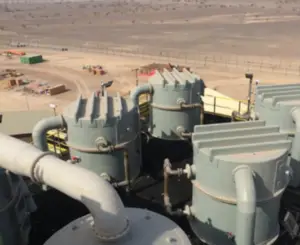
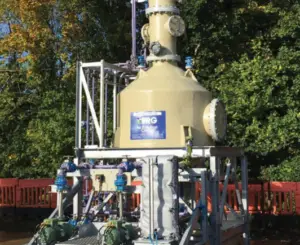
– V-texscrubbers – used where a packed tower would block, e.g. due to high solids or tar concentration in the inlet gas stream, or where scrubbing with a liquid slurry is desirable. – Tray towers — use a series of horizontal trays instead of packing, well suited to large flowrates or streams with both particulate and soluble gas present. – Spray towers — use fine liquid droplets rather than packing or trays, offering very low pressure drop and good resistance to fouling for coarse particulate or fast-hydrolysing contaminants. – Venturi scrubbers — accelerate the gas through a constricted throat to shear the liquid into droplets, particularly effective on fine dust or high-concentration streams.
Each of these configurations has its own strengths in terms of removal efficiency, pressure drop, footprint and tolerance to solids — see the dedicated guides linked below for more detail on each.
Where Are Chemical Scrubbers Used?
Chemical scrubbers are widely used across:
– Wastewater and sewage treatment — controlling H₂S and odour from inlet works, sludge handling and tanks
– Municipal and food waste facilities — treating odour where higher contaminant loads or more stringent discharge limits apply
– Chemical and pharmaceutical manufacturing — treating vents from reactors, storage tanks and process exhausts containing acid gases, basic gases and soluble VOCs
– Metal refining and processing
– General industrial processes — wherever acid or basic gases need to be safely neutralised before discharge
They are frequently used as the primary bulk-removal stage, with a downstream carbon filter added to polish any residual odour or trace VOCs that the scrubber doesn’t fully remove.
Chemical Scrubbers vs. Other Air Pollution Control Technologies
– Bio-trickling filters are typically preferred over chemical scrubbers where contaminants are biodegradable, loadings are low to medium, and a lower-chemical, more sustainable solution is wanted. Chemical scrubbers are the better choice where fast response is needed, contaminants aren’t biodegradable, or operating conditions (high temperature, variable loads, aggressive chemistry) make biological treatment unsuitable.
– Carbon filters are often used downstream of a chemical scrubber as a polishing stage, rather than as an alternative to it.
– Thermal oxidisers tend to be favoured over chemical scrubbing for very high VOC concentrations, where the pollutant load is better destroyed by combustion than neutralised chemically.
Benefits and Limitations
Benefits:
– High removal efficiencies, typically 99.5% and up to 99.999% where required
– Handles a very wide range of flowrates — from around 100 to over 100,000 m³/hr per tower
– Effective against acid gases, basic gases and odour in a single system
– Fast start-up and stable performance under variable loads, compared with biological alternatives
– Proven, well-understood technology with decades of industrial application
Limitations:
– Requires ongoing chemical dosing, adding to running costs versus biological alternatives
– Produces a spent liquor / blowdown stream that must be treated or disposed of correctly
– Less effective on insoluble, non-reactive VOCs or very high dust loadings without additional pre-treatment
– Requires monitoring and control of pH/ORP and reagent strength to maintain performance
Frequently Asked Questions
What are chemical scrubbers used for?
A chemical scrubber is used to remove acid gases, basic gases, odour compounds and some soluble VOCs from industrial and wastewater air streams by absorbing and chemically neutralising them in a reactive liquid.
What’s the difference between a chemical scrubber and a packed tower?
A chemical scrubber describes the technology — using a reactive liquid to neutralise pollutants. A packed tower is one common piece of equipment used to achieve that reaction, providing a packed bed to maximise contact between the gas and the scrubbing liquid. Tray towers, spray towers and venturi scrubbers are alternative configurations for the same underlying chemical scrubbing process.
When is a chemical scrubber preferred over a bio-trickling filter?
A chemical scrubber is typically preferred where fast response is required, contaminants are not readily biodegradable, or operating conditions — such as high temperatures, variable loads or aggressive chemistries — make biological treatment less suitable.
How efficient are chemical scrubbers at removing pollutants?
Well-designed chemical scrubbers typically achieve removal efficiencies of 99.5%, and up to 99.999% where required, depending on tower sizing, packing selection and reagent dosing.
Explore ERG’s Chemical Scrubber Technology
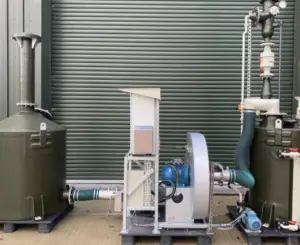
ERG designs and manufactures chemical scrubbers — as stand-alone systems or combined with downstream carbon polishing — for wastewater, municipal waste, chemical and industrial applications.
– See ERG’s full technical chemical scrubber range: Chemical Scrubbers
– See the packed tower configuration in more technical detail: Packed Towers
– Explore chemical abatement systems for the chemical and pharmaceutical sector: Chemical
– Read the companion guide on the biological alternative: Bio-Trickling Filters Guide
– Read the companion guide on downstream polishing: Carbon Filters Guide
Talk to our team about a chemical scrubbing solution for your site’s acid gas, odour or VOC emissions.